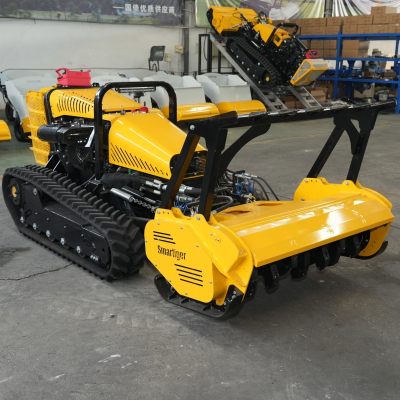
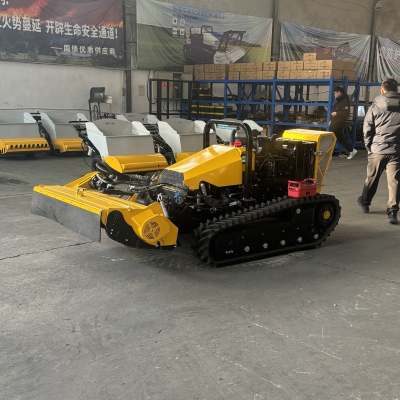
How to choose diesel land clearing equipment?
Guide for Selecting Diesel Forest Clearing Equipment for Complex Terrain: A Professional Strategy for Precise Demand Matching
Global forestry development and ecological restoration projects are gradually extending to complex terrains such as mountains, hills, and tropical jungles. These areas are characterized by large topographic fluctuations, diverse vegetation types, and harsh operating environments, which impose stringent requirements on the adaptability, stability, and efficiency of forest clearing equipment. Diesel-powered equipment has become the mainstream choice for forest clearing in complex terrains due to its strong torque output, stable endurance, and resistance to extreme environments. For international B2B buyers, scientific equipment selection directly determines operational efficiency and cost control, and is also crucial to the safe, compliant, and sustainable advancement of projects. Starting from the industry background and market trends, this article systematically dissects the core key points for selecting diesel forest clearing equipment in complex terrains and answers high-frequency procurement questions.
Industry Background and Global Market Dynamics
With the increasing global focus on the sustainable utilization of forestry resources and the advancement of the "carbon neutrality" goal, the process of forestry mechanization and intelligent upgrading has accelerated, making equipment for complex terrain operations a core driver of market growth. Data shows that the global forestry machinery market size exceeded 23.2 billion US dollars in 2025 and is expected to reach 32.5 billion US dollars by 2030, with a compound annual growth rate of 6.8%. Among them, the niche market for specialized clearing equipment suitable for complex terrains such as mountains and hills has achieved significant growth. Driven by the demand for forestry industrialization upgrading in emerging economies such as China and India, the Asia-Pacific region has a growth rate of 9.2%, far exceeding the global average; emerging markets such as Southeast Asia and Africa have seen an average annual demand growth rate of more than 8% for such equipment, driven by projects such as palm plantation development and shelterbelt construction.
At the policy level, the introduction of forestry modernization policies in many parts of the world has further driven the demand for equipment upgrading. For example, China's 14th Five-Year Plan clearly requires increasing the forestry mechanization rate to 65% by 2025, focusing on supporting the R&D and promotion of small multi-functional machinery for mountainous and hilly areas; the EU's strict carbon emission regulations have forced diesel equipment to upgrade towards high efficiency and low emissions, while encouraging the integration of forestry machinery with intelligent monitoring and precision navigation technologies. In this market environment, the selection of diesel forest clearing equipment for complex terrains by international B2B buyers has shifted from a purely performance-oriented consideration to a comprehensive evaluation of "adaptability + compliance + intelligence."
Core Development Trends of Forestry Equipment for Complex Terrain
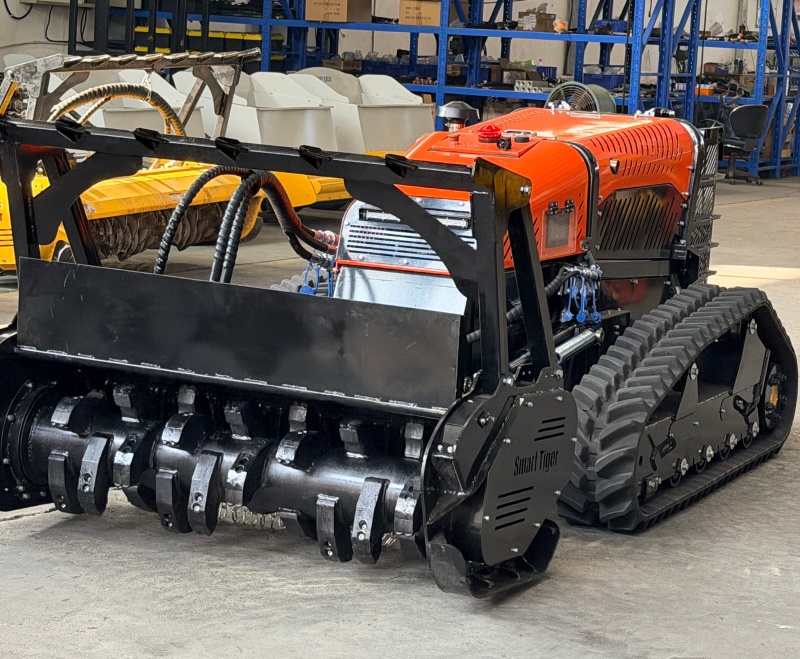
Currently, the development trends of diesel forest clearing equipment for complex terrains are highly aligned with the core needs of buyers, providing a clear direction for equipment selection:
1. Precision in Terrain Adaptability: Equipment design has shifted from "general-purpose" to "scene-customized," with exclusive configurations launched for different slopes, soil conditions, and vegetation types. For example, for steep slope areas with a slope greater than 30°, high-tooth crawler tracks and body automatic leveling systems have been developed; for rock-exposed areas, special accessories such as hydraulic breakers are equipped.
2. Synergy of High Efficiency and Environmental Protection: Diesel engines are upgrading to Euro V and Euro VI emission standards, while adopting direct injection technology and oil-air hybrid cooling systems to improve fuel efficiency; vegetation waste generated after equipment operation can be processed into organic fertilizer raw materials through supporting crushing devices, realizing resource recycling.
Core Technical Points for Selecting Diesel Forest Clearing Equipment for Complex Terrain
Combining industry trends and operational needs, the selection of diesel forest clearing equipment for complex terrains should focus on the following core technical dimensions:
1. Power and Transmission System: Adapting to Extreme Working Conditions: Priority should be given to diesel engines with stable torque output and high power at low speeds. The rated power needs to be adjusted according to the operation object—for clearing shrubs with a diameter ≤ 100mm, 30-40Kw models can be selected; for handling miscellaneous trees with a diameter > 200mm, models with more than 50Kw are required. The transmission system is recommended to be hydrostatic transmission, combined with skid steering function to ensure flexible maneuvering in narrow areas. At the same time, attention should be paid to the slope adaptability of the transmission system, which requires a longitudinal slope bearing capacity of not less than 35° and a transverse slope bearing capacity of not less than 15°, complying with relevant industry safety standards.
2. Travel System: Ensuring Passability and Stability: Crawler-type travel is the core choice for complex terrains, and the type of crawler track needs to be selected according to terrain conditions: for rugged mountainous areas and areas with sharp vegetation, steel crawler tracks are preferred to improve wear resistance; for forestlands with gentle slopes that require surface protection, rubber crawler tracks are selected to reduce the ground contact pressure to below 32kPa. The crawler track tooth height and ground contact area need to match the operation slope. For example, high-tooth crawler tracks with a tooth height twice that of the standard model are required for operations on 55° steep slopes to ensure grip. In addition, the body leveling system is indispensable, requiring a lateral automatic compensation range of ≥ ± 12° to ensure the operation flatness error ≤ 3°.
3. Operation System: Balancing Efficiency and Adaptability: The number and material of tools need to match the vegetation hardness. Tungsten steel tools with a hardness of HRC60 or above are suitable for processing hard wood, with a regrinding interval of not less than 200h; the operation width is selected according to the operation scale—1000-1200mm models can be selected for small-scale forestlands, and wide-width models of more than 1500mm are recommended for large-scale plantations. For complex vegetation types, priority should be given to equipment that supports bidirectional stepless speed regulation, with a recommended speed range of 2000-3000rpm, which can flexibly handle tough bamboo and hard miscellaneous wood.
4. Safety and Protection System: Coping with Harsh Environments: Equipped with a remote control system with a remote control distance > 150m to ensure that operators work in safe areas; multiple safety devices such as electronic fences, emergency stop buttons, and power-off protection are set up to automatically alarm and decelerate when the equipment approaches dangerous areas. At the same time, the entire machine must have good sealing performance, with no oil leakage or water leakage during 30min of operation, adapting to the humid and dusty forest environment.
Manufacturing and Application Processes: Hidden Considerations for Selection
High-quality manufacturing processes and mature application solutions are the guarantee for the stable operation of equipment, and are also key links easily overlooked during selection. On the manufacturing side, it is necessary to select products whose core components (engine, hydraulic pump, crawler track) are from well-known suppliers, and have a complete quality inspection process, including slope operation testing, durability testing, safety performance testing, etc., to ensure compliance with international forestry machinery standards.
On the application side, suppliers should be able to provide customized operation solutions. For example, for operations on slopes above 25°, a collaborative solution of "rail transport vehicle + clearing equipment" can be provided, which solves the problem of material transportation through rail transport vehicles and allows clearing equipment to focus on operations, improving overall efficiency; for areas with rock coverage > 30%, integrated process adaptation suggestions of "crushing + clearing + land preparation" are provided. In addition, comprehensive localized service capabilities, such as spare parts supply, on-site commissioning, and operator training, are also important considerations for reducing procurement risks.
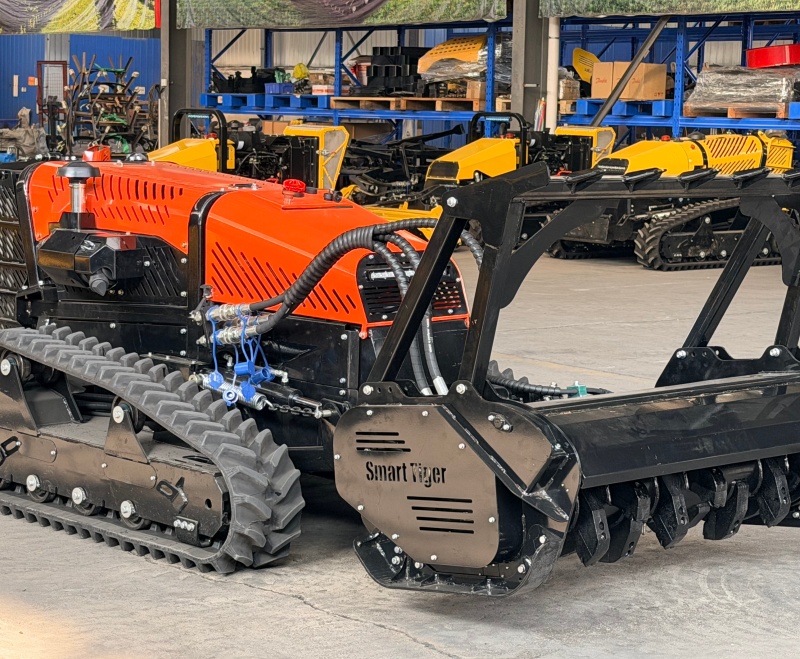
Frequently Asked Questions (FAQs) on Equipment Selection for International B2B Buyers
Q1: How to determine if the equipment is suitable for the specific operation scenario of the local complex terrain?A1: First, it is necessary to provide detailed terrain parameters (slope distribution, soil type, rock coverage), vegetation information (main tree species, diameter range), and operation objectives (clearing efficiency, whether subsequent land preparation is required); priority should be given to selecting suppliers that can provide on-site surveys and customized configurations, and verify the passability, operation efficiency, and stability of the equipment through on-site prototype testing to ensure adaptability.
Q2: Compared with ordinary equipment, diesel equipment with high emission standards has higher costs. How to balance environmental compliance and procurement budget?A2: Priority can be given to equipment equipped with high-efficiency diesel engines. Although the initial procurement cost of such equipment is 5%-10% higher, the fuel efficiency is improved by 15%-20%, which can reduce operating costs in the long run; at the same time, pay attention to the environmental protection subsidy policies of the target market. Some regions provide 10%-15% procurement subsidies for forestry equipment that meets Euro V and above standards, which can effectively offset cost pressure.
Q3: How to ensure the operational stability of diesel equipment in extreme temperature (high temperature, low temperature) environments?A3: Select equipment with design adaptations for extreme temperatures. For high-temperature environments, it is necessary to be equipped with large-capacity radiators and hydraulic oil cooling systems; for low-temperature environments, it is necessary to be equipped with engine preheating devices and fuel heating systems. In addition, require suppliers to provide targeted maintenance plans, such as the replacement cycle of cooling fluid in high-temperature seasons and suggestions on fuel grades in low-temperature seasons, to ensure the stable operation of the equipment under extreme conditions.
The selection of diesel forest clearing equipment for complex terrains is a systematic project that needs to closely integrate market trends, operation scenarios, and own cost budgets, conduct a comprehensive evaluation from core technical dimensions such as power, travel, operation, and safety, and at the same time pay attention to manufacturing processes and after-sales service capabilities. For international B2B buyers, precise selection can not only improve operational efficiency and reduce operational risks, but also provide a solid guarantee for the sustainable advancement of forestry projects. Choosing equipment suppliers with both technical advantages and scenario adaptation capabilities will be the key to enhancing procurement value.