Steep Slope Mower
Remote-Controlled Mowers: The Future of Steep Slope Vegetation Management
Whether for highway embankments, river dikes, solar farms, or terraced agriculture, the maintenance of steep slopes has long been one of the most dangerous and labor-intensive tasks in land management. Traditional methods, relying on manual labor with brush cutters or unstable walk-behind mowers, not only pose significant safety hazards but are becoming increasingly unsustainable due to rising labor costs. Today, the industry is witnessing a paradigm shift. Advanced remote-controlled mowers are emerging as the ultimate solution for steep slope mowing and brush cutting, combining industrial-grade power with intelligent safety features to conquer complex terrains previously deemed inaccessible.
The Critical Challenge of Slope Stability and Safety
For decades, facility managers and landscaping contractors have faced a difficult dilemma when maintaining slopes exceeding 30 degrees. Standard wheeled mowers lack the traction required for climbing, are prone to slipping, and carry a high risk of rollover accidents. Consequently, many organizations have had to rely on manual crews. However, this approach is fraught with peril; workers navigating loose gravel, wet grass, or dense undergrowth on 45-degree slopes face constant risks of falls and injuries.
Furthermore, the economic model of manual labor is collapsing. In regions such as North America and Europe, shortages in landscaping labor have driven up costs, making the maintenance of large infrastructure slopes prohibitively expensive. The industry urgently needs a machine that can separate the operator from the hazard—thus, the era of industrial remote-controlled vegetation management has arrived.
Engineered for the Extreme: The Rise of the "Crawler" Mower
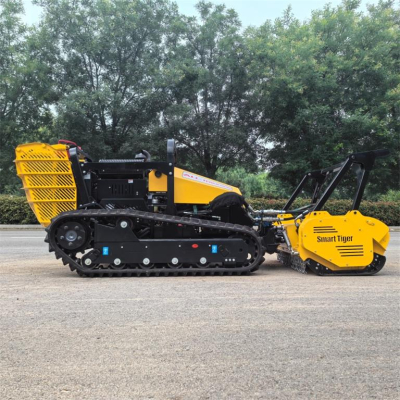
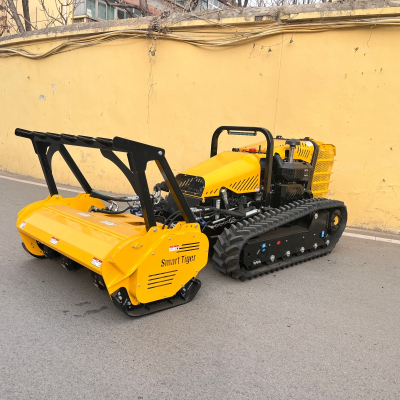
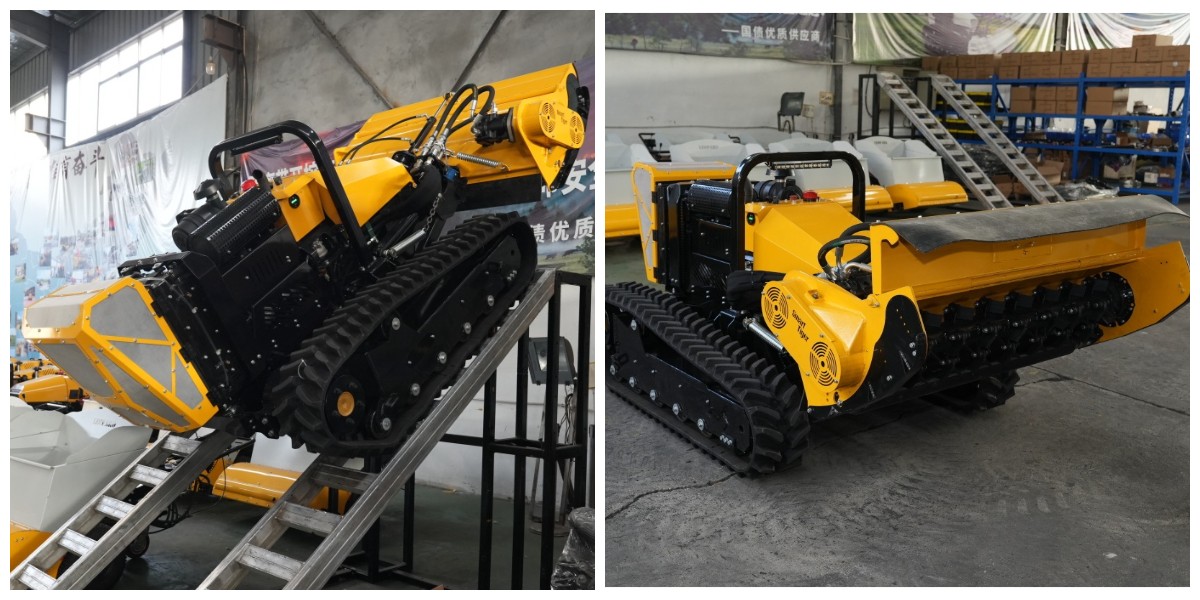
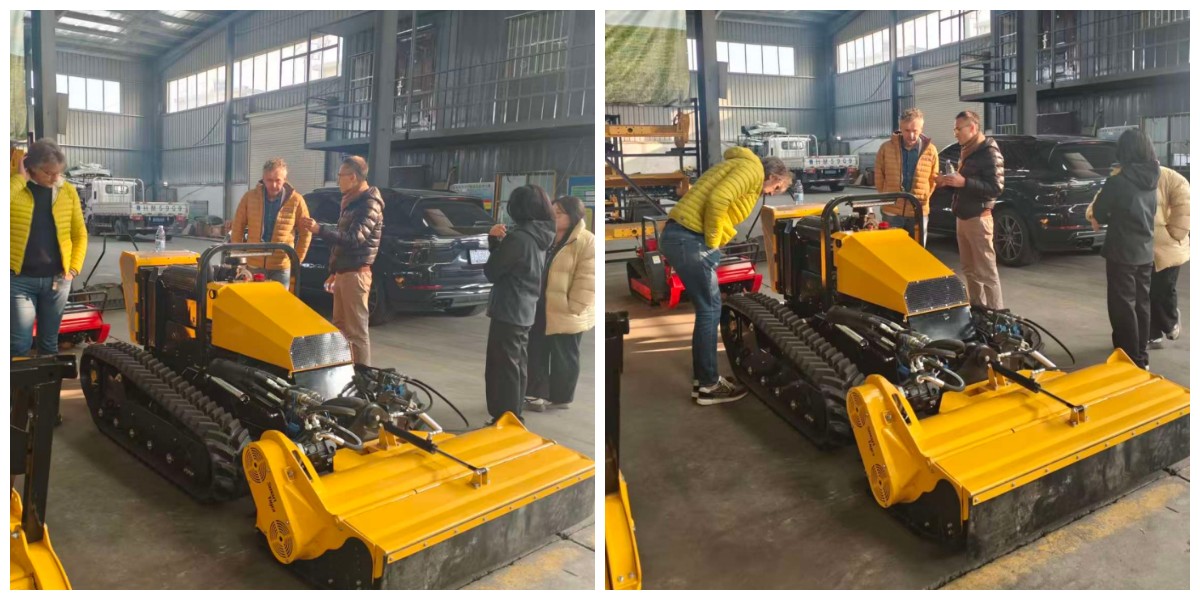
Modern remote-controlled mowers, often resembling miniature tanks, are specifically designed to overcome the physics of gravity. Unlike their wheeled predecessors, these machines utilize wide, reinforced rubber tracks. This design choice is critical for steep slope mowing for several reasons:
Traction and Grip: The large surface area of the tracks, often equipped with aggressive treads or "grousers," bites into the soil, providing the necessary friction to ascend slopes of up to 55 degrees.
Low Ground Pressure: By distributing the machine's weight over a larger area, tracks prevent the mower from sinking into soft or muddy embankments, a common issue with heavy wheeled tractors.
Low Center of Gravity: Heavy components like the engine and hydraulic pumps are mounted low in the chassis. This design minimizes the risk of tipping, ensuring stability even when traversing side slopes.
Leading manufacturers are pushing these limits further. For instance, recent innovations from the Chinese market have produced units capable of handling 60-degree inclines, utilizing high-torque diesel engines and specialized chassis designs to maintain a foothold where even human footing is treacherous.
Versatility: From Fine Grass to Dense Brush
For international B2B buyers, a key selling point of these machines is their versatility. They are not merely lawn mowers but land-clearing platforms. Equipped with high-speed hydraulic motors and durable flail heads, these mowers can seamlessly transition from manicuring highway grass to clearing dense, woody vegetation.
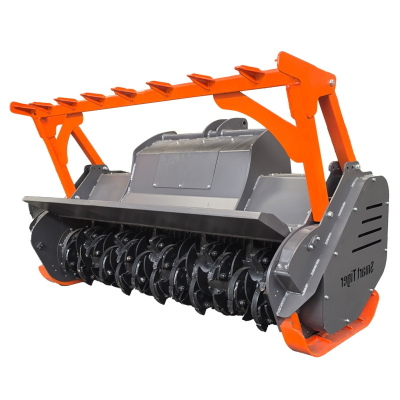
The cutting mechanisms typically employ "Y-shaped" flail knives made of hardened manganese steel. These blades are designed to pulverize vegetation, including shrubs and small trees up to 30mm or even 100mm in diameter (depending on the attachment). This "mulching" capability is vital for slope brush cutting. By shredding vegetation into fine particles, the machine leaves a layer of organic mulch on the ground. This not only eliminates fire hazards—crucial for solar farms and dry embankments—but also returns nutrients to the soil, promoting sustainable land management.
Intelligent Safety and Remote Operation
The defining feature of this technology is the ability to operate the machine from a safe distance. Utilizing 2.4G or 5.8G wireless technology, operators can control the mower from over 150 meters away, with line-of-sight ranges in open areas typically extending up to 200 meters.
This "man-machine separation" is the ultimate safety protocol. If the machine encounters an obstacle, hits a rock, or reaches a slope angle exceeding its safety limits, the operator remains completely out of the danger zone. Modern units are equipped with sophisticated sensors that monitor the machine's attitude in real-time. If the mower tilts beyond a safe threshold (typically triggering an alarm at 50 degrees and automatically cutting the engine at 55 degrees), the system intervenes to prevent rollovers. Additionally, features like signal-loss protection ensure that if the remote connection is interrupted, the machine automatically halts, preventing runaway incidents.
Market Outlook and ROI for Contractors
For landscaping contractors and municipal infrastructure managers, the Return on Investment (ROI) for remote-controlled mowers is compelling. A single machine can often replace a manual crew of 10 to 20 people. In practical terms, a task that might take a team three days to complete manually can often be accomplished by one operator and one machine in a single day.
Beyond speed, the quality of the cut is superior. The tracks allow the machine to traverse uneven terrain smoothly, while hydraulic lift systems allow the cutting deck to "float" over the ground, ensuring a consistent cutting height without scalping the turf or damaging the soil structure.