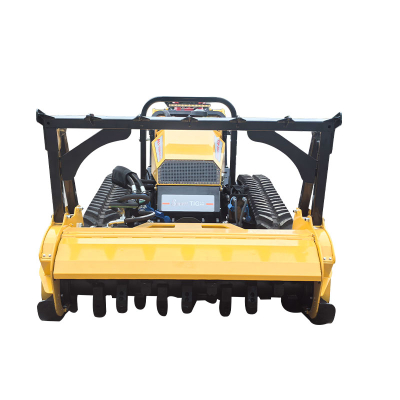
How Remote Forestry Mulchers Are Revolutionizing Wildfire Prevention and Fuel Load Reduction
Wildfires have become increasingly frequent, intense, and destructive across the globe. In the western United States alone, recent large-scale, severe wildfires have prompted extensive mechanical fuel treatment programs to reduce potential wildfire size and severity. The pattern is consistent worldwide: longer fire seasons, drier conditions, and more communities situated in the wildland-urban interface have created an urgent need for more effective vegetation management strategies.
The traditional approaches to wildfire prevention—prescribed burning, manual clearing, and conventional heavy equipment—all have significant limitations. Prescribed burns carry their own risks and are constrained by weather conditions. Manual clearing is slow, labor-intensive, and dangerous on steep terrain. Conventional bulldozers and excavators struggle to operate safely on slopes, often causing soil damage and leaving critical areas untreated.
Enter the Remote Forestry Mulcher—a technological innovation that is fundamentally changing how land managers, fire departments, and forestry professionals approach wildfire prevention and fuel load reduction. These remote-controlled, tracked machines are engineered to operate safely on the steepest, most challenging terrain, transforming hazardous vegetation into protective mulch while keeping operators out of harm's way.
This article explores how the Remote Forestry Mulcher is revolutionizing wildfire prevention, the science behind fuel load reduction, and why these machines have become indispensable tools in the fight against catastrophic fires.
Understanding the Wildfire Fuel Problem
What Is Fuel Load and Why Does It Matter?
Fuel load refers to the accumulated combustible vegetation and organic material in a given area—everything from dry grasses and fallen leaves to underbrush, shrubs, and small trees. When fuel loads become excessive, wildfires burn hotter, faster, and with greater intensity, making them far more difficult to contain.
The fuel structure matters as much as the quantity. Ladder fuels—low-lying vegetation and dead material that allow a fire to climb from the ground into the tree canopy—are particularly dangerous. Once a fire reaches the canopy, it spreads rapidly and becomes much harder to control. Forestry mulching removes these ladder fuels, breaking the vertical continuity of vegetation and helping keep fires ground-based, where they are easier to manage.
The U.S. Forest Service has documented that mulching treatments reduce tree density and canopy bulk density while increasing canopy base height, potentially lowering active crown fire risk. In other words, strategic vegetation management with a Remote Forestry Mulcher doesn't just clear land—it fundamentally alters fire behavior.
The Scale of the Challenge
The numbers are staggering. Mechanical fuel reduction treatments can cost anywhere from $40 to $600 per acre or more, depending on terrain, vegetation type and density, and the amount of acreage to be treated. With millions of acres at risk across the western United States alone, the need for cost-effective, scalable solutions has never been greater.
Traditional methods simply cannot keep pace. Manual clearing is too slow and too dangerous. Prescribed burning, while effective, is limited by weather, air quality concerns, and the availability of trained personnel. Conventional heavy equipment cannot access the steepest slopes where some of the most critical fuel reduction work is needed.
This is where the Remote Forestry Mulcher offers a transformative solution.
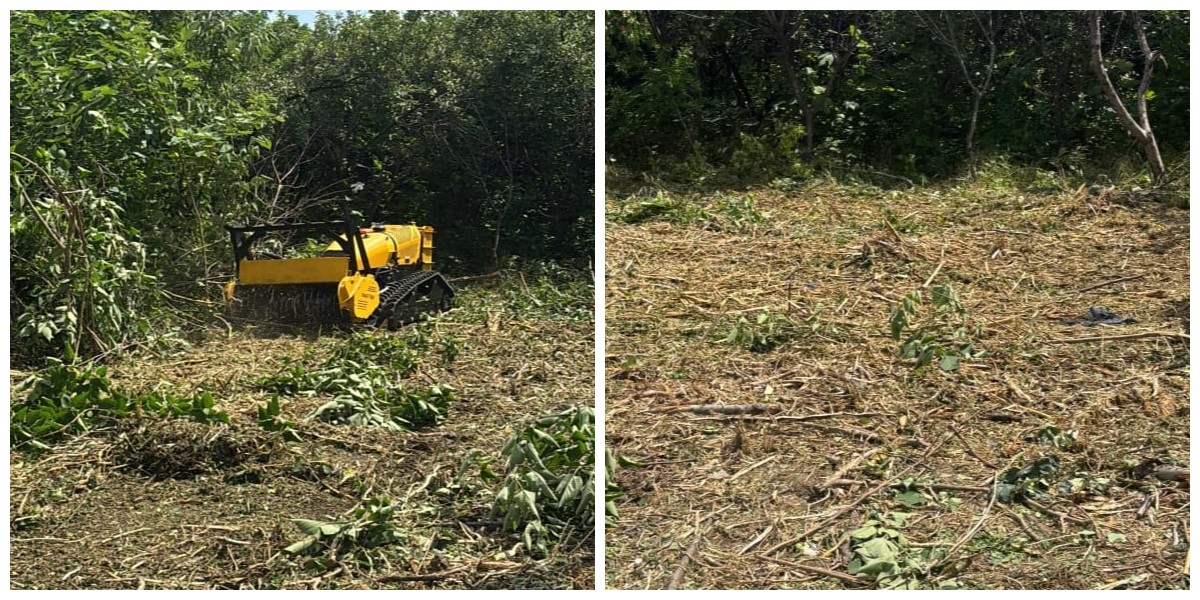
The Remote Forestry Mulcher – A Technological Revolution
Engineered for the Toughest Terrain
The Remote Forestry Mulcher is not simply a conventional mulcher with a remote control added. It is an entirely different class of machine, engineered from the ground up for extreme terrain and hazardous environments.
Modern Remote Forestry Mulcher platforms are built on tracked undercarriages that provide exceptional stability and traction on steep slopes. The FAE RCU series, for example, features a heavy-duty undercarriage with a hydraulic variable track system and independent undercarriage frames, enabling operation on slopes up to 55 degrees. The RCU45, FAE's most compact model, is powered by a 44-horsepower Yanmar engine and features an automatic rubber track tensioning system that provides traction on slopes up to 55 degrees.
SEPPI's MICROFORST rc, another example of a specialized Remote Forestry Mulcher attachment, can mulch bushes and wood up to 15 cm in diameter, operating with a hydraulic pressure of 150–350 bar. The track width on some models can be extended up to 181 cm, allowing them to manage slopes of 55° incline.
The Hitech RXR-JM120D Forestry Remote Control Mulcher is similarly designed for slope work, with a maximum working slope of 55° and a compact structure with a low center of gravity design. Its applications include cleaning up combustibles under the forest and opening up forest fire isolation belts and fire prevention ditches.
What makes these capabilities so significant for wildfire prevention is that the most critical fuel reduction work often needs to occur on the steepest, most inaccessible slopes—precisely where conventional equipment cannot operate safely.
Remote Control – Safety at the Core
The defining feature of the Remote Forestry Mulcher is, of course, the remote control system. By removing the operator from the machine, these devices eliminate the most significant risk factor in steep terrain operations: the human being.
Operators can control a Remote Forestry Mulcher from distances of up to 150 meters or more. The Dronster, for instance, features a remote control system operable from up to 150 metres away, ensuring that operators can maintain a safe distance during high-risk operations. The Green Climber LV800 takes this even further, with remote operation from up to 350 metres.
This distance is not merely a convenience—it is a life-saving feature. During wildfire prevention work, operators may be working near unstable slopes, in areas with dead or dying trees that could fall, or in locations where access is limited and emergency response would be difficult. The Remote Forestry Mulcher allows these critical tasks to be completed without exposing personnel to these hazards.
The remote control systems on modern Remote Forestry Mulcher platforms are sophisticated and reliable. Emergency stop functions and rotor brakes provide an additional layer of safety, allowing operators to halt operations instantly if conditions change. Industrial-grade remote control systems with large displays provide real-time diagnostics, allowing operators to monitor machine performance and terrain conditions continuously.
The Science of Fuel Load Reduction
The Remote Forestry Mulcher is not just a clearing tool—it is a precision fuel management instrument. The mulching process transforms hazardous vegetation into finely shredded material that behaves very differently from untreated fuels.
When a Remote Forestry Mulcher processes vegetation, it breaks down thick brush, saplings, and deadfall into fine mulch. This mulch breaks down over time and does not ignite as easily as dry sticks and logs. The process significantly reduces the overall combustible material on the ground.
The benefits extend beyond simple fuel removal. The shredded vegetation left behind creates a protective layer that serves multiple purposes: soil protection, erosion control, and—perhaps most importantly—fire risk reduction. This layer helps retain moisture in the soil, reducing the risk of fires starting from dry conditions.
Research has confirmed the effectiveness of this approach. Studies have shown that mulching treatments can reduce tree density and canopy bulk density while increasing canopy base height, potentially lowering active crown fire risk. Mechanical fuel treatments are machine activities designed to change the size and arrangement of forest biomass by either severing stems and creating smaller fragments (mastication). These treatments address fire risk by either removing vegetation or by breaking fuel connections by changing the size and arrangements of fuels.
Perhaps most compellingly, recent research has shown that trees in treated areas were three times more likely to survive fire than trees in untreated sites. The most effective fuel treatment was mechanical- and hand-thinning areas across multiple years, followed by mastication.
Key Applications in Wildfire Prevention
Creating Defensible Space Around Communities
One of the most critical applications of the Remote Forestry Mulcher is creating defensible space around communities in the wildland-urban interface. By reducing fuel loads in high-risk areas, these machines help create defensible space around communities, infrastructure, and natural resources.
This is especially important in states like California, Colorado, and Oregon, where wildfires have become increasingly frequent and destructive. Using a Remote Forestry Mulcher, crews can quickly remove dense brush and small trees along roadsides, ridgelines, and other strategic locations, turning hazardous material into mulch that slows future growth and protects the soil.
The Applegate Valley Fire Equipment Acquisition project in Oregon is a real-world example of this approach in action. The project includes two remote-controlled tracked forestry mulchers to allow for more efficient and effective vegetation removal to reduce wildfire risk near critical infrastructure. The goal is to deliver fuels reduction near critical infrastructure to allow safer evacuation routes, maintain and cut back hazardous vegetation, and reduce the potential for catastrophic fire events that threaten lives, homes, and the local economy.
Strategic Firebreak Construction
Firebreaks—strips of land where fuel has been removed—are one of the most effective tools for slowing or stopping the spread of wildfire. When done strategically, forestry mulching can be used to establish firebreaks that help stop or slow the spread of fire.
The Remote Forestry Mulcher is ideally suited to firebreak construction, particularly in areas where terrain makes conventional methods difficult or impossible. The FAE RCU-75, for example, is specifically designed for maintaining vegetation in forested and roadside areas and can be used on hillsides and in forests to create fire breaks.
Firebreaks created with a Remote Forestry Mulcher can be placed around homes, driveways, property lines, or along wooded trails. By limiting where a fire can travel, these protective buffers offer critical protection for people, structures, and livestock.
The Dronster, a remote-controlled forestry mulcher from Vallfirest, has been demonstrated at international wildfire management events for its effectiveness in creating defense lines and managing fire perimeters. Its ability to operate at a constant speed and deliver consistent results makes it particularly valuable for firebreak construction.
Utility and Infrastructure Protection
Power lines, pipelines, and other critical infrastructure are particularly vulnerable to wildfire damage. Vegetation growth can obstruct access, damage equipment, and create safety hazards if left unchecked. The Remote Forestry Mulcher offers a fast, effective way to maintain these critical zones, ensuring safe and reliable operations.
The Australian Rail Track Corporation has been using mechanical mulchers to clear hazardous vegetation around electricity lines along the rail corridor. These machines rapidly process overgrown vegetation into mulch, reducing fuel loads while also minimising environmental impact and inhibiting regrowth. The remote-controlled mulchers provide work crews with the ability to safely access hard-to-reach areas, including steep terrain.
By integrating this cutting-edge technology with strategic planning, organizations are not only ensuring compliance with safety regulations but also enhancing the resilience of critical infrastructure during bushfire season.
Forest Health and Ecological Restoration
Beyond immediate fire prevention, the Remote Forestry Mulcher plays a vital role in promoting long-term forest health. Thick underbrush and invasive species compete with native trees for sunlight, nutrients, and water. A stressed forest is more prone to disease, pest infestation, and ultimately fire.
Forestry mulching restores balance to the ecosystem by clearing overcrowded spaces and encouraging healthy growth. Healthier forests are more resilient to fire and less likely to suffer catastrophic losses. The mulch left behind by the mulching process decomposes and returns nutrients to the soil, promoting the growth of fire-resistant native plants.
The Tahoe Keys forestry project, described by officials as a "game changer," demonstrates this integrated approach. The 43-acre mastication project, conducted in partnership with the U.S. Forest Service, used remote-operated masticators to chip vegetation and spread chips around the treatment area. This management clears out ladder fuels that would otherwise cause flames to leap into the canopy, improving forest health and reducing wildfire risks.
The Economic and Operational Case for Remote Forestry Mulchers
Cost-Effectiveness at Scale
The economics of wildfire prevention are challenging. With millions of acres requiring treatment and limited budgets, every dollar must be spent effectively. The Remote Forestry Mulcher offers compelling cost advantages over alternative methods.
First, the speed of operation is significantly faster than manual clearing. A single operator with a Remote Forestry Mulcher can accomplish what previously required a crew of workers. This is particularly important in an industry facing persistent labor shortages.
Second, the reduced need for follow-up treatments is a significant cost saver. Traditional mowing or clearing often requires repeated passes as vegetation regrows. The mulching process, by contrast, provides longer-lasting results. The shredded material left behind inhibits regrowth and reduces the need for repeated interventions.
Third, the environmental benefits translate into cost savings. By eliminating the need for chemical herbicides or repeated mechanical cutting, the Remote Forestry Mulcher offers a more sustainable approach that reduces long-term maintenance costs.
Improved Access for Emergency Services
One of the less obvious but critically important benefits of fuel reduction with a Remote Forestry Mulcher is improved access for emergency services. Overgrown properties make it difficult for fire crews and emergency vehicles to navigate during a crisis. By thinning dense areas and opening up access roads or trails, forestry mulching makes it easier and faster for first responders to reach vulnerable areas. This can be the difference between saving and losing a home.
Insurance and Risk Management
As wildfires have become more frequent and destructive, insurance companies have become increasingly concerned about fire risk. Property owners in high-risk areas face rising premiums or even the loss of coverage altogether.
Fuel reduction treatments with a Remote Forestry Mulcher can help address this challenge. By demonstrating that proactive vegetation management has been completed, property owners and communities can present a lower risk profile to insurers. As noted in the Tahoe Keys project, on-the-ground work could help to address rising insurance rates by providing more accurate models and data of wildfire risks.
Best Practices for Remote Forestry Mulcher Operations
Strategic Planning and Assessment
Before deploying a Remote Forestry Mulcher, operators should conduct a thorough assessment of the site. This includes identifying the steepest slopes, noting any obstacles or hazards, and determining the optimal approach for the job.
Understanding the specific characteristics of the site—soil type, vegetation density, moisture conditions, and slope orientation—allows operators to select the appropriate settings and attachments for the task. Many Remote Forestry Mulcher platforms feature incline displays that provide real-time slope readings, helping operators stay within safe operating parameters.
Equipment Selection and Configuration
Different terrains need different machines. Using the correct Remote Forestry Mulcher boosts productivity, minimizes fuel usage, and ensures safe clearing without damaging the surrounding land or resources.
The choice of mulching head is particularly important. For dense brush and small trees, a forestry mulching head with fixed blades or carbide-tipped hammers is appropriate. For lighter vegetation, a swinging hammer mulcher may be more efficient. The FAE RCU45, for example, can be paired with the BL0/RCU forestry mulching head for branches up to 10 cm in diameter or the PML/RCU swinging hammer mulcher for grass and small shrubs up to 5 cm in diameter.
Safety and Maintenance
While the Remote Forestry Mulcher removes the operator from the most hazardous environments, proper safety protocols remain essential. Operators should maintain clear communication with ground crews, monitor the machine continuously, and be prepared to use emergency stop functions if conditions change.
Regular maintenance is critical for reliable operation. Key maintenance tasks include track inspection and tensioning, engine and hydraulic system checks, mulching head maintenance, and remote control system checks. Many Remote Forestry Mulcher platforms feature diagnostic systems that provide maintenance reminders and performance data, simplifying the maintenance process.
Integration with Other Treatments
The Remote Forestry Mulcher is most effective when integrated with other fuel reduction strategies. Mechanical fuels reduction may be used either as a stand-alone treatment or to "step down" fuels before prescribed burning. Mechanical thinning is often prescribed in dry coniferous forests to reduce stand density, ladder fuels, and canopy fuels before using prescribed burning to manage surface fuels.
Research has shown that mastication-based thinning followed by prescribed burning can be effective for reducing fuels and wildfire hazards and for modifying overstory stand structure. The Remote Forestry Mulcher plays a critical role in this integrated approach.
The Future of Wildfire Prevention
The Remote Forestry Mulcher represents a significant advancement in wildfire prevention technology, but it is also part of a broader trend toward automation and remote operation in land management.
As technology continues to evolve, we can expect to see further innovations in Remote Forestry Mulcher design. These may include enhanced autonomous features, improved obstacle detection and avoidance systems, and even greater slope capabilities. Integration with drone-based surveying and mapping systems could enable more precise and efficient fuel reduction planning.
The growing emphasis on environmental sustainability is also driving innovation. The Remote Forestry Mulcher already offers environmental benefits through reduced soil compaction, elimination of the need for chemical herbicides, and the creation of nutrient-rich mulch that promotes soil health. Future developments may further enhance these benefits.
The urgency of the wildfire crisis is driving rapid adoption. As California Natural Resources Agency Secretary Wade Crowfoot said of the Tahoe Keys project, "This project is a game changer. We need many more of them". The U.S. Forest Service and other agencies are likely to continue these kinds of partnerships in order to get fuel reductions work done.
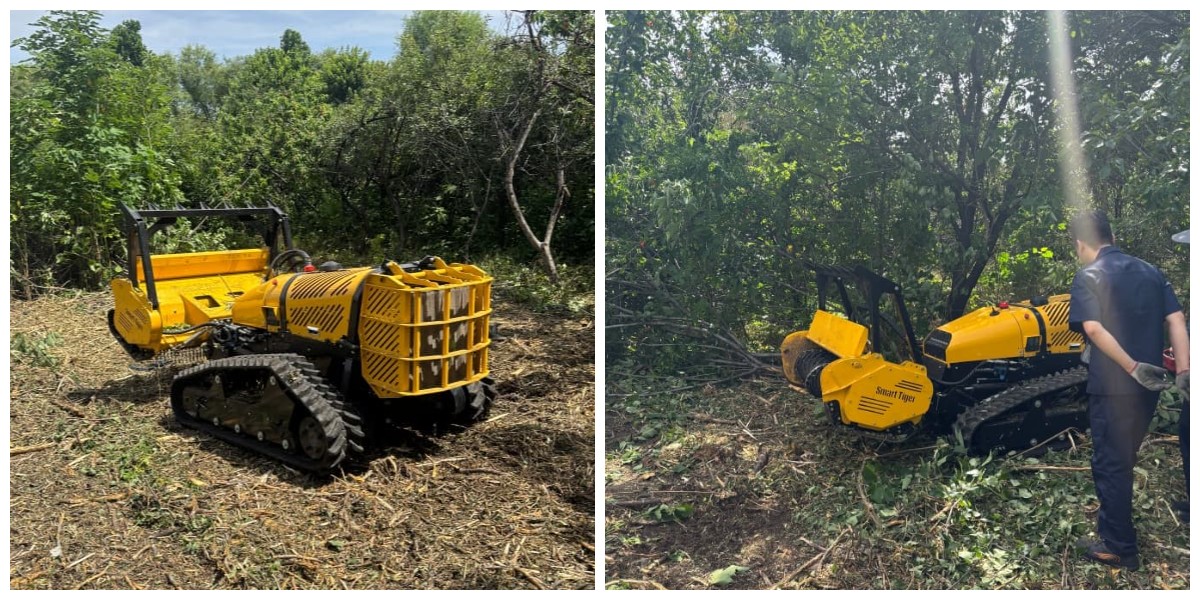
Conclusion: Investing in Prevention
Wildfires are becoming more frequent, more destructive, and more expensive. The traditional approaches to wildfire prevention—while valuable—are no longer sufficient to address the scale of the challenge. New tools and new strategies are needed.
The Remote Forestry Mulcher offers a transformative solution. By combining remote-control operation with a tracked undercarriage and powerful mulching attachments, these machines enable land managers to tackle the steepest, most challenging terrain safely and efficiently. They remove hazardous vegetation, reduce fuel loads, break ladder fuels, and create strategic firebreaks—all while keeping operators out of harm's way.
The benefits extend beyond fire prevention. The Remote Forestry Mulcher promotes forest health, improves access for emergency services, and provides a cost-effective approach to large-scale fuel reduction. For fire departments, land management agencies, utility companies, and private landowners, these machines have become indispensable tools in the fight against catastrophic wildfires.
The technology has arrived. The question is no longer whether to adopt Remote Forestry Mulcher technology for wildfire prevention, but how quickly organizations can integrate these transformative machines into their operations.
As Tom Harbour, former National Director of Fire and Aviation Management for the U.S. Forest Service, observed: "The best way to fight wildfires is to prevent them. Vegetation management is our first line of defense". The Remote Forestry Mulcher is making that first line of defense stronger, safer, and more effective than ever before.