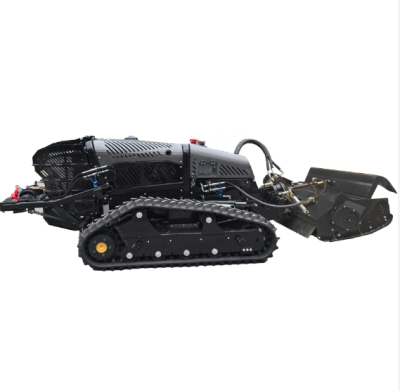
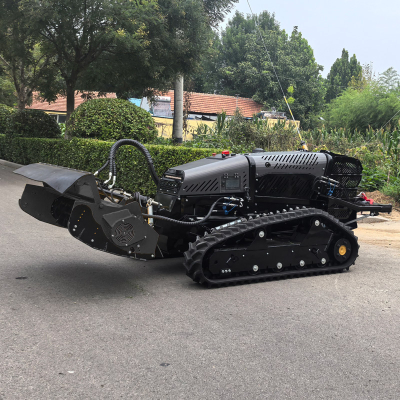
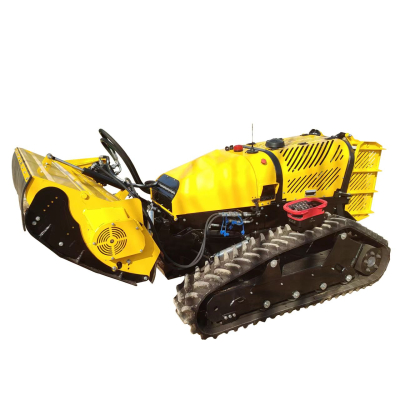
Remote Forestry Mulcher Tackles 55° Slopes – The Safe Solution for Steep Terrain Vegetation Management
Vegetation management on steep slopes has long been one of the most hazardous and logistically challenging tasks in the forestry, infrastructure maintenance, and land management sectors. Whether it is roadside embankments, power line corridors, pipeline rights-of-way, dam faces, or mountainous terrain, the need to control overgrowth, clear brush, and maintain defensible space is constant—yet the means of doing so safely and efficiently have historically been limited.
Traditional approaches to steep slope vegetation management typically involve either manual labor with handheld brush cutters or heavy machinery that struggles to maintain stability on inclines. Both methods carry significant risks. Manual workers face the dangers of slips, falls, and encounters with hidden obstacles on unstable ground. Conventional tractor-mounted or skid-steer mulchers, while powerful, often cannot operate on slopes exceeding 20 to 25 degrees without risking rollover.
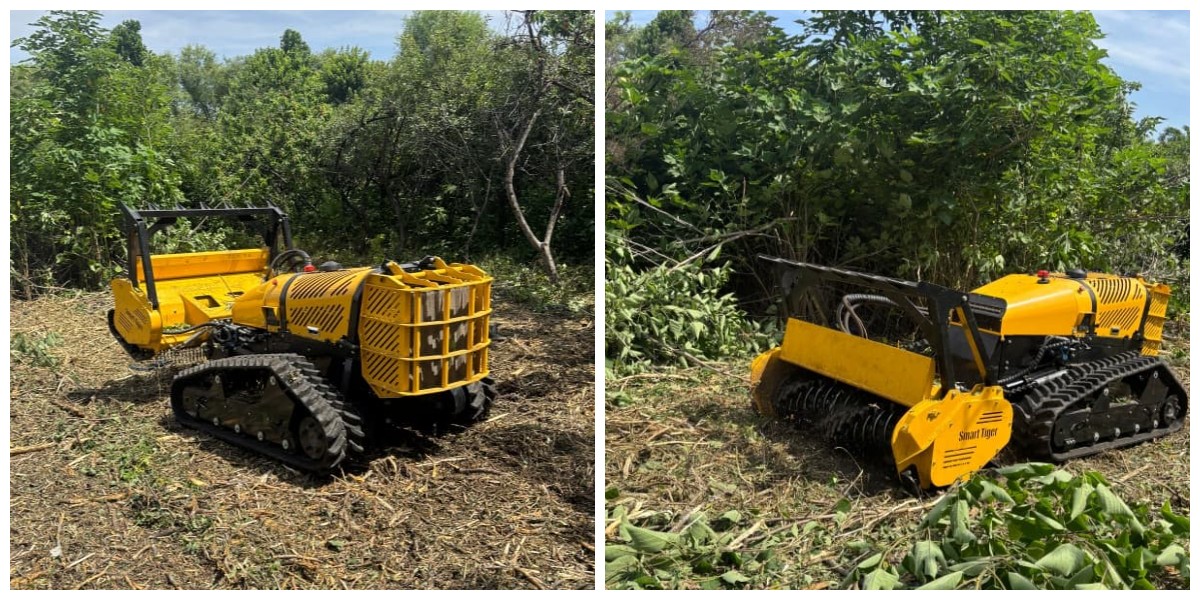
Enter the Remote Forestry Mulcher—a specialized piece of equipment engineered specifically for the unique demands of steep terrain. Capable of tackling slopes up to 55°, these remote-controlled tracked machines are transforming how vegetation management professionals approach high-risk environments.
This article explores the capabilities, applications, and operational advantages of the Remote Forestry Mulcher, demonstrating why it has become the preferred solution for contractors, municipal agencies, and utility companies facing the challenges of steep slope vegetation management.
Understanding the Limitations of Conventional Steep Slope Equipment
The Safety Gap in Traditional Approaches
Operating conventional mulching equipment on steep slopes presents a cascade of safety concerns that no amount of operator training can fully eliminate. When a tractor or skid-steer loader operates on an incline beyond its design limits, the center of gravity shifts dangerously, increasing the risk of rollover. According to industry data, rollover incidents remain one of the leading causes of fatalities in forestry and land-clearing operations.
Manual brush cutting is equally hazardous. Workers using handheld equipment on slopes face the constant risk of losing footing, particularly on loose soil, wet grass, or uneven terrain. The physical demands of maintaining balance while operating cutting tools at awkward angles lead to fatigue, which in turn increases the likelihood of accidents. Steep slopes, tree shadows, uneven light conditions, and proximity to watercourses or rock formations further reduce visual control and limit spatial awareness.
Efficiency and Accessibility Constraints
Beyond safety, conventional methods are simply inefficient. Tractor-mounted mulchers require relatively flat, stable ground to operate effectively. When the terrain becomes too steep, operators are forced to either abandon the task or resort to slower, more labor-intensive methods. The result is incomplete vegetation management, recurring maintenance cycles, and escalating costs.
Manual clearing on steep slopes is slow, physically demanding, and produces inconsistent results. A job that might take hours with a mulcher can stretch into days with hand tools, and the quality of work varies significantly depending on the skill and endurance of the crew.
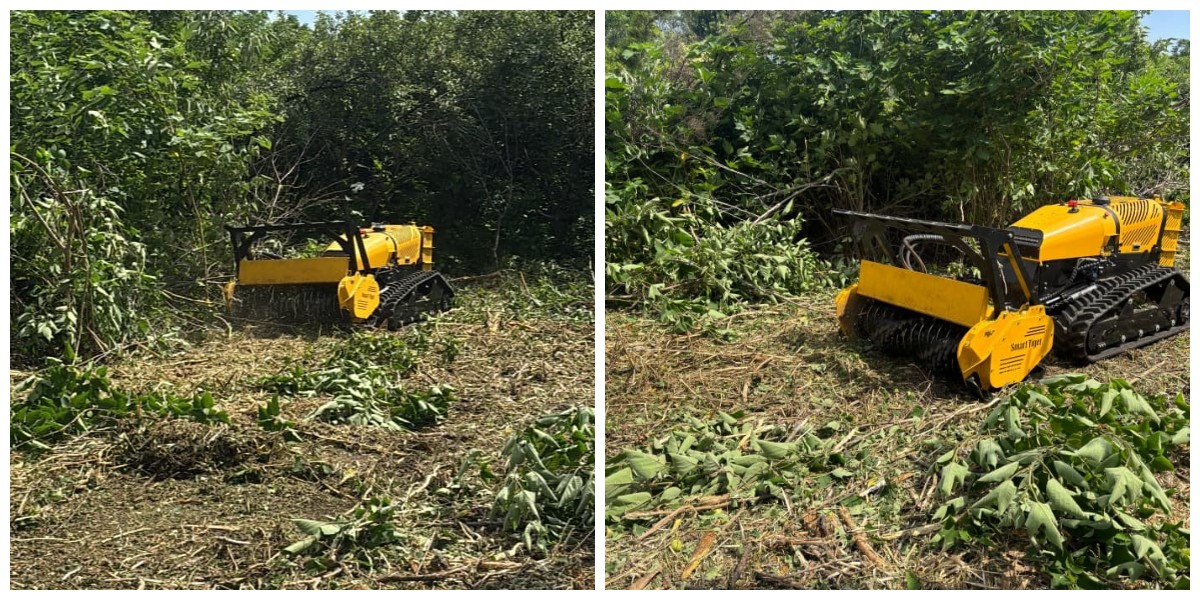
The Remote Forestry Mulcher – Engineering for Extreme Terrain
The Remote Forestry Mulcher represents a fundamental shift in how steep slope vegetation management is approached. By combining remote-control operation with a tracked undercarriage and powerful mulching attachments, these machines are engineered to go where conventional equipment cannot—and to do so safely.
55° Slope Capability – The Defining Feature
What truly sets the Remote Forestry Mulcher apart is its ability to operate on slopes up to 55°. This capability is not merely a marketing claim; it is the result of deliberate engineering choices that prioritize stability and traction.
Several manufacturers have developed Remote Forestry Mulcher platforms that achieve this level of slope performance. The FAE RCU series, for example, offers models ranging from the compact RCU45 to the powerful RCU120, all capable of working on slopes up to 55°. The RCU55 features a 56-hp Kohler engine and a heavy-duty undercarriage with a hydraulic variable track system and independent undercarriage frames for maximum stability on steep terrain. The RCU75, with its 74-hp engine, offers similar capabilities for more demanding applications. At the top of the range, the RCU120 delivers 120 horsepower and can mulch vegetation up to 20 cm in diameter while maintaining stability on 55° slopes.
SEPPI's MAX 50 le is another example of a Remote Forestry Mulcher engineered for extreme slopes. With 49 HP from a Perkins turbo diesel engine, the machine features an optimally positioned low center of gravity and an extendable track width of up to 181 cm, allowing it to manage slopes up to 55°.
The Energreen RoboMAX takes a similar approach, with a 75 HP diesel engine and a special track design that provides excellent grip in all directions on slopes up to 55°. The machine's low center of gravity and specialized oil sump ensure proper lubrication even when operating at extreme angles.
Tracked Undercarriage – The Foundation of Stability
The tracked undercarriage is the foundation upon which the Remote Forestry Mulcher's slope capability is built. Unlike wheeled machines that concentrate weight on small contact patches, tracked undercarriages distribute the machine's weight over a much larger surface area. This reduces ground pressure, prevents soil compaction, and provides superior traction on loose, wet, or uneven surfaces.
The track systems on modern Remote Forestry Mulcher platforms incorporate several advanced features. Hydraulic variable track systems allow operators to adjust track width to match terrain conditions, providing additional stability when needed. Automatic tensioning systems maintain optimal track tension even under challenging conditions, ensuring consistent traction and reducing the risk of track derailment.
The high-profile rubber tracks commonly found on Remote Forestry Mulcher machines provide excellent grip on a variety of surfaces, from grass and soil to rock and gravel. For particularly demanding applications, steel tracks are available as an option, offering maximum durability in rocky or abrasive conditions.
Remote Control – Removing the Operator from Harm's Way
Perhaps the most significant safety feature of the Remote Forestry Mulcher is the simple fact that the operator is not on the machine. By controlling the mulcher from a safe distance—often up to 150 meters or more—operators can manage steep slopes, hazardous areas, and dense vegetation without direct exposure to the risks that conventional methods entail.
Modern Remote Forestry Mulcher systems feature advanced radio control with large displays that provide real-time diagnostics, incline readings, and vehicle status information. Emergency stop functions and rotor brakes provide an additional layer of safety, allowing operators to halt operations instantly if conditions change.
The remote control also enables operators to position themselves for optimal visibility of the work area. Rather than being perched on a slope with limited sightlines, the operator can stand on level ground with a clear view of the machine and the terrain it is navigating. This improves both safety and work quality, as the operator can make more informed decisions about cutting patterns and obstacle avoidance.
Key Features and Technologies of the Remote Forestry Mulcher
Powerful Engine Options
Remote Forestry Mulcher platforms are available with a range of engine options to match different application requirements. Diesel engines are the most common choice, offering the torque and fuel efficiency needed for demanding mulching tasks. Engine power typically ranges from 40 HP to 120 HP or more.
Advanced Mulching Attachments
The mulching head is the heart of any Remote Forestry Mulcher operation. These attachments are designed to handle a wide range of vegetation, from grass and brush to branches and small trees.
Intelligent Control Systems
Modern Remote Forestry Mulcher platforms incorporate sophisticated electronic control systems that optimize performance and simplify operation. Dual hydrostatic transmissions ensure sufficient power to both the tracks and the attachment simultaneously, maintaining optimal performance even under heavy loads.
These intelligent systems not only improve productivity but also simplify troubleshooting and maintenance, reducing downtime and extending the service life of the Remote Forestry Mulcher.
Applications Across Industries
The versatility of the Remote Forestry Mulcher makes it an invaluable tool across multiple sectors. Its ability to operate safely on steep slopes opens up applications that were previously difficult, dangerous, or impossible to address efficiently.
Utility Corridor Maintenance
Power line rights-of-way, pipeline corridors, and telecommunications infrastructure require regular vegetation management to maintain access and prevent service interruptions. These corridors often traverse challenging terrain, including steep hillsides and remote areas.
A Remote Forestry Mulcher can navigate these challenging environments safely, clearing vegetation without putting operators at risk. The machine's tracked undercarriage provides stability on uneven ground, while the remote control allows operators to maintain a safe distance from hazards such as downed power lines or unstable slopes.
Roadside and Railway Embankments
Highway and railway embankments present some of the most challenging vegetation management scenarios. Slopes are often steep, access is limited, and the consequences of equipment failure or operator injury can be severe.
The Remote Forestry Mulcher is ideally suited to these applications. Its 55° slope capability allows it to tackle even the steepest embankments. Remote operation keeps the operator safely on level ground, away from traffic and the edge of the slope. The machine's compact size and maneuverability make it effective even in confined spaces alongside roads and railways.
Solar Farm Vegetation Management
Large-scale solar installations require regular vegetation control to prevent shading of panels and maintain access for maintenance. Solar farms are often located on marginal land, including slopes and uneven terrain.
The Remote Forestry Mulcher offers an efficient solution for solar farm vegetation management. Its tracked design minimizes soil disturbance and prevents damage to sensitive ground conditions. The remote control allows operators to navigate between panel rows and around obstacles without the risk of damaging expensive equipment. The mulching action reduces vegetation to a fine consistency that decomposes quickly, returning nutrients to the soil.
Water Conservancy and Flood Control
Dams, levees, and drainage channels require regular vegetation management to maintain structural integrity and ensure proper water flow. These areas are often steep, close to water, and difficult to access with conventional equipment.
The Remote Forestry Mulcher can operate safely on these critical structures, removing vegetation that could compromise the integrity of the embankment. The tracked undercarriage provides stability on soft, often saturated ground, while the remote control keeps operators away from the water's edge.
Forestry and Wildfire Prevention
In forested areas, vegetation management plays a critical role in wildfire prevention. Creating and maintaining firebreaks, clearing underbrush, and reducing fuel loads are essential tasks that often must be performed on steep, remote terrain.
The Remote Forestry Mulcher enables these critical fire prevention activities to be carried out safely and efficiently. The machine can clear dense brush and small trees, creating defensible space around structures and reducing the intensity of potential wildfires. The mulching action leaves a layer of ground cover that helps prevent erosion while eliminating the fuel that could feed a fire.
The Economic Case for the Remote Forestry Mulcher
Labor Cost Reduction
One of the most compelling arguments for investing in a Remote Forestry Mulcher is the reduction in labor costs. A single operator with a remote-controlled machine can accomplish what previously required a crew of workers with handheld equipment. This is particularly significant in an industry facing persistent labor shortages.
The efficiency gains are substantial. Industry research has shown that remote-controlled mulching equipment can significantly reduce both the cost and the potential for safety incidents during forestry mulching operations. By completing jobs faster and with fewer personnel, contractors can improve their margins and take on more work.
Reduced Liability and Insurance Costs
The safety advantages of the Remote Forestry Mulcher translate directly into reduced liability and lower insurance costs. By removing operators from the most hazardous environments, the risk of workplace injuries—and the associated claims and lost productivity—is substantially reduced.
Insurance providers recognize these risk reductions. Organizations that invest in remote-controlled equipment may be eligible for lower premiums, and the reduced frequency of incidents can lead to better claims histories over time.
Expanded Service Capabilities
For contractors, the Remote Forestry Mulcher opens up new service capabilities and revenue streams. Jobs that were previously too dangerous or difficult to bid on become viable. This allows contractors to differentiate themselves from competitors and capture higher-value work.
The versatility of the Remote Forestry Mulcher also means that a single machine can serve multiple applications, from roadside maintenance to solar farm management to firebreak creation. This flexibility maximizes the return on investment and ensures that the equipment remains productive across different seasons and market conditions.
Best Practices for Remote Forestry Mulcher Operation
Terrain Assessment and Planning
Before deploying a Remote Forestry Mulcher on a new site, operators should conduct a thorough terrain assessment. This includes identifying the steepest slopes, noting any obstacles or hazards, and determining the optimal approach for the job.
Understanding the specific characteristics of the site—soil type, vegetation density, moisture conditions, and slope orientation—allows operators to select the appropriate settings and attachments for the task. Many Remote Forestry Mulcher platforms feature incline displays that provide real-time slope readings, helping operators stay within safe operating parameters.
Starting with Lower Gradients
For operators who are new to remote-controlled mulching, it is advisable to start with lower gradients before tackling the steepest slopes. This allows the operator to become familiar with the machine's controls, responsiveness, and handling characteristics in a lower-risk environment.
As confidence and skill develop, operators can progressively take on more challenging terrain. This gradual approach reduces the risk of accidents and ensures that the operator is fully prepared for the demands of extreme slope operation.
Regular Maintenance and Inspection
Like any piece of heavy equipment, the Remote Forestry Mulcher requires regular maintenance to perform at its best. Key maintenance tasks include:
Track inspection and tensioning: Check tracks for wear and damage, and maintain proper tension to ensure optimal traction.
Engine and hydraulic system checks: Regular oil changes, filter replacements, and fluid level checks are essential for reliable operation.
Mulching head maintenance: Inspect blades or hammers for wear and replace them as needed to maintain cutting efficiency.
Remote control system checks: Ensure that the remote control is functioning properly and that batteries are charged.
Many Remote Forestry Mulcher platforms feature diagnostic systems that provide maintenance reminders and performance data, simplifying the maintenance process.
The Future of Steep Slope Vegetation Management
The Remote Forestry Mulcher represents a significant advancement in vegetation management technology, but it is also part of a broader trend toward automation and remote operation in the forestry and land management sectors.
As technology continues to evolve, we can expect to see further innovations in Remote Forestry Mulcher design. These may include enhanced autonomous features, improved obstacle detection and avoidance systems, and even greater slope capabilities. Integration with drone-based surveying and mapping systems could enable more precise and efficient vegetation management planning.
The growing emphasis on environmental sustainability is also driving innovation. The Remote Forestry Mulcher already offers environmental benefits through reduced soil compaction and the elimination of the need for chemical herbicides. Future developments may further enhance these benefits, making remote-controlled mulching an increasingly attractive option for environmentally conscious land managers.
Conclusion: Investing in Safety and Efficiency
Vegetation management on steep slopes has always been one of the most challenging and hazardous tasks in the forestry and land management industries. Traditional methods—whether manual labor or conventional heavy equipment—carry significant risks and are often inefficient.
The Remote Forestry Mulcher offers a fundamentally different approach. By combining remote-control operation with a tracked undercarriage and powerful mulching attachments, these machines enable operators to tackle slopes up to 55° safely and efficiently. The operator remains on level ground, away from the hazards of the slope, while the machine does the work.
The benefits extend far beyond safety. A Remote Forestry Mulcher can complete jobs faster and with fewer personnel than traditional methods, reducing labor costs and improving profitability. The versatility of these machines allows them to serve multiple applications, from utility corridor maintenance to solar farm vegetation management to wildfire prevention.
For contractors, municipal agencies, and utility companies facing the challenges of steep slope vegetation management, the Remote Forestry Mulcher is not just an equipment choice—it is a strategic investment in safety, efficiency, and long-term operational success.
The technology has arrived. The question is no longer whether to adopt remote-controlled mulching for steep terrain, but how quickly organizations can integrate this transformative capability into their operations.