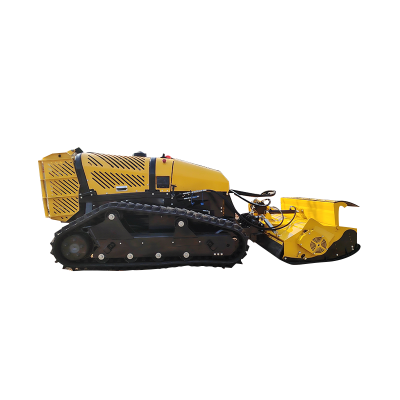
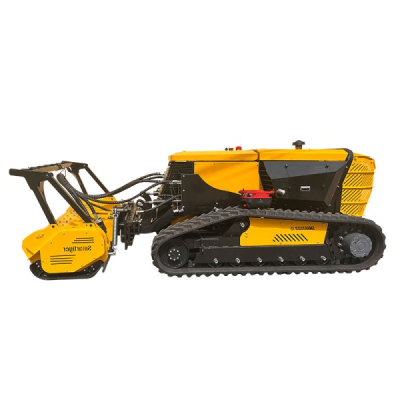
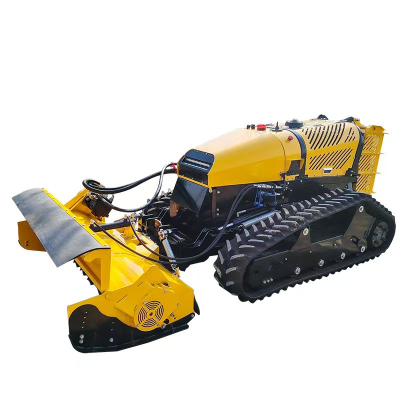
Stump grinder is suitable for stump grinding and crushing
Technological Iteration and Upgrade of Stump Grinders: Paving a New Path for Forestry Waste Resource Utilization
With the advancement of the global "dual carbon" goals and the growing popularity of ecological environmental protection concepts, resource recycling has become a core direction for the transformation of various industries. In the fields of forestry production and municipal greening, the long-standing industry pain point of stump disposal is being resolved through technological innovations in the new generation of stump grinders. This equipment, integrating efficient crushing, intelligent control and green transformation, not only gradually replaces traditional extensive disposal methods such as landfilling and incineration, but also constructs a new model of "on-site disposal and cyclic value-added", opening up a new path for the resource utilization of forestry waste and injecting strong momentum into green development.
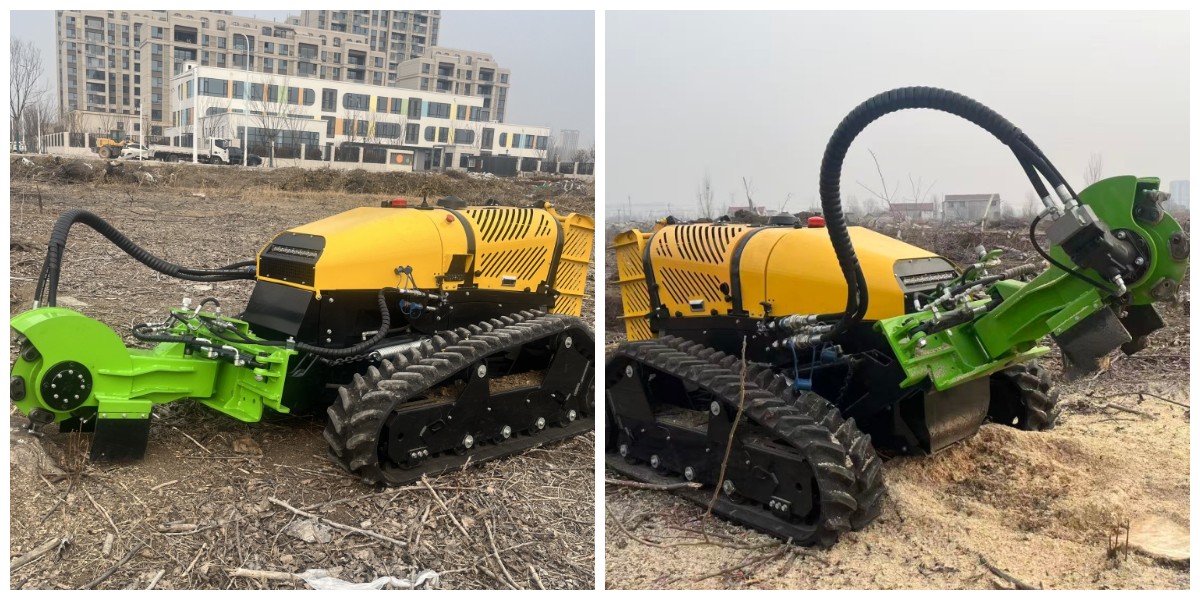
For a long time, stumps left after tree felling, road greening pruning and ancient and famous tree renewal have been a persistent problem plaguing the industry. From an ecological perspective, exposed stumps are prone to become breeding and habitats for forest pests such as termites and longhorn beetles, accelerating the spread of diseases and pests among forests and disrupting ecological balance. From the perspective of safety and landscape, stumps in public areas such as parks, community walkways and scenic spots not only affect environmental cleanliness and landscape integrity, but also easily cause pedestrians to trip and fall, posing potential safety hazards. Traditional disposal methods have many limitations: landfilling requires a large amount of land resources, and the long decay cycle of stumps is likely to pollute soil and groundwater; incineration produces harmful gases such as carbon monoxide and particulate matter, exacerbating air pollution and failing to meet environmental protection requirements; in remote forest areas, stump transportation requires substantial investment in manpower and material resources, and the transportation cost often exceeds the disposal value of the stumps themselves, ultimately forming an industry dilemma of "difficult disposal, low utilization and heavy pollution".
Technological innovation is breaking this deadlock. The new generation of stump grinders has achieved a leap from "extensive disposal" to "precision utilization" through multi-dimensional performance breakthroughs. Current mainstream models have completed comprehensive upgrades in power output, operational flexibility and environmental friendliness, adapting to operational needs in different scenarios. Taking new high-end models on the market as examples, they are generally equipped with imported high-power diesel engines and reinforced alloy cutting systems, with torque output reaching over 120Nm. Combined with precision transmission structures, they can easily grind and crush large stumps with a diameter of more than 80 centimeters, completely removing the main body of stumps and shallow root systems, and eliminating tree regeneration and pest breeding from the source. At the same time, adopting a low-speed and high-torque operation mode, it can avoid safety risks caused by high-speed debris splashing, making it safely applicable to sensitive scenarios such as urban parks, residential areas and campuses.
Upgrades in intelligent and user-friendly design have further expanded the application boundaries of stump grinders and lowered the operational threshold. Many models are equipped with a 2.4G industrial-grade remote control system, with an effective control distance of more than 150 meters. Operators can remotely adjust grinding progress, speed and depth in real time through handheld terminals in safe areas, avoiding risks such as debris impact and equipment tipping that may occur during close-range operations. Coupled with flexible steering functions, it can freely shuttle in confined spaces such as forest paths and residential lanes, easily passing through standard courtyard gates and green isolation belts. In addition, the intelligent control system can automatically monitor engine load, oil temperature and grinding pressure, dynamically adjust operational parameters, ensuring grinding efficiency while reducing equipment wear and extending continuous operation time to more than 8 hours, significantly improving operational efficiency.
More notably, stump grinders have built a closed-loop disposal model of "crushing-resource utilization", truly turning forestry waste into treasure and achieving a win-win situation of ecological and economic value. The wood chips and wood powder produced by grinding can be classified and utilized according to particle size, forming diversified application scenarios: coarse-grained wood chips can be directly used as organic mulch, laid on the surface of orchards, vineyards and urban green spaces, which can not only lock soil moisture, improve soil fertility, but also inhibit weed growth, reduce pesticide usage and improve the soil ecological environment; fine-grained wood powder, after fermentation and decomposition, can be converted into edible fungus cultivation substrate and organic fertilizer, widely used in agricultural planting and greening maintenance to realize nutrient cycling; in addition, wood chips can also be used as biomass fuel for biomass power generation, boiler heating and other fields, replacing fossil energy and reducing carbon emissions. In projects such as urban greening upgrading in Xiongan New Area, ecological restoration of Beijing Yongledian Forest Farm and forestry resource utilization in Lin'an, Zhejiang, stump ground materials have been successfully applied. In the Yongledian Forest Farm project alone, the resource utilization of stumps has increased the income per mu of forest land by more than 2,000 yuan, reducing disposal costs while creating additional economic benefits for the forest farm, forming a replicable and promotable model.
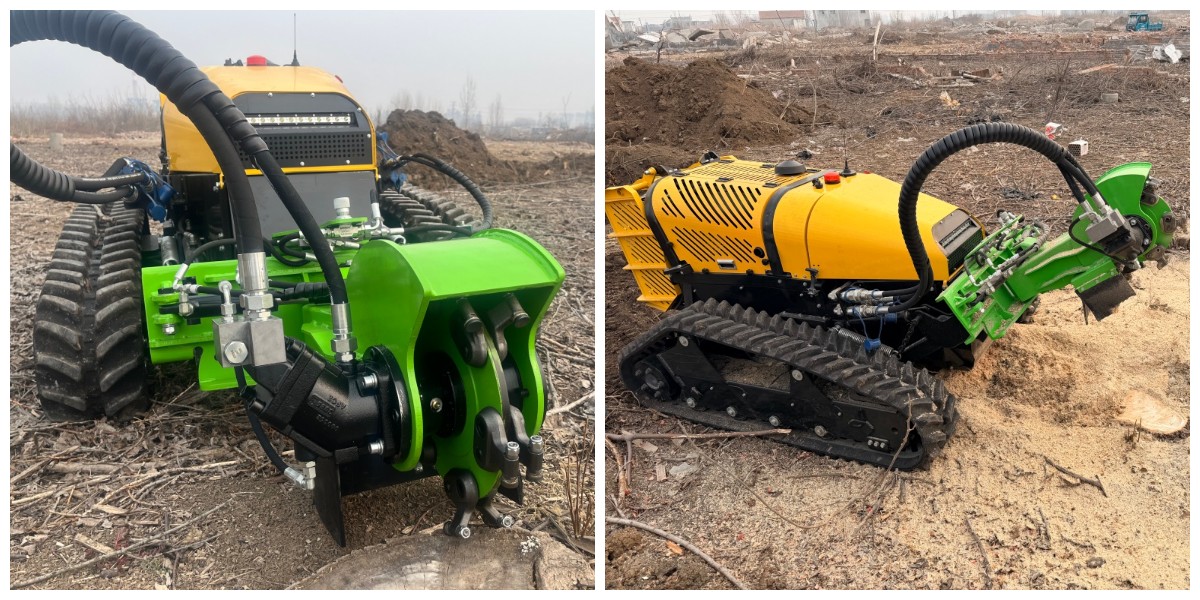
Industry data shows that with the tightening of environmental policies and the increasing demand for resource recycling, the global stump grinder market scale continues to expand, expected to reach 134.88 million US dollars by 2032. Municipal greening, forestry management, landscape renovation and agricultural planting have become core demand scenarios. Currently, technological innovation is accelerating, with innovative directions such as new energy models, IoT intelligent monitoring and modular grinding heads gradually being implemented. Some enterprises have launched electric stump grinders to achieve zero-emission operations; the application of IoT technology has endowed equipment with remote diagnosis, fault early warning and data statistics functions, facilitating large-scale operation management. In the future, stump grinders will develop towards more energy-saving, precise and integrated directions, further improving the efficiency of resource utilization.
Industry experts stated that the popularization and application of stump grinders not only effectively solve the ecological and safety pain points of traditional stump disposal, but also reconstruct the value logic of forestry waste, providing important support for the green transformation of forestry. Guided by the "dual carbon" goals, such green equipment will become a key tool for promoting sustainable forestry development and improving the urban ecological management system. Its technological iteration and model innovation will also provide a replicable practical path for global ecological governance and resource recycling, helping to build a green development pattern of harmonious coexistence between humans and nature.