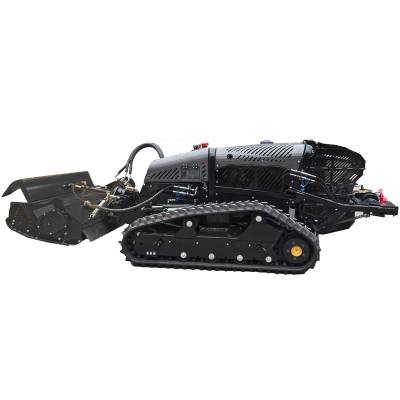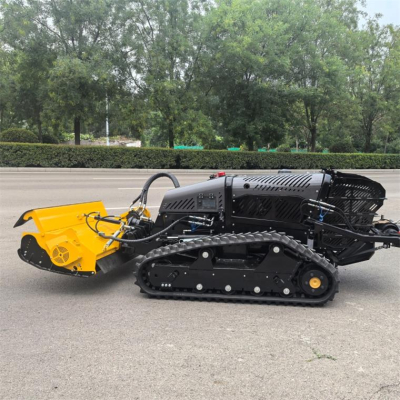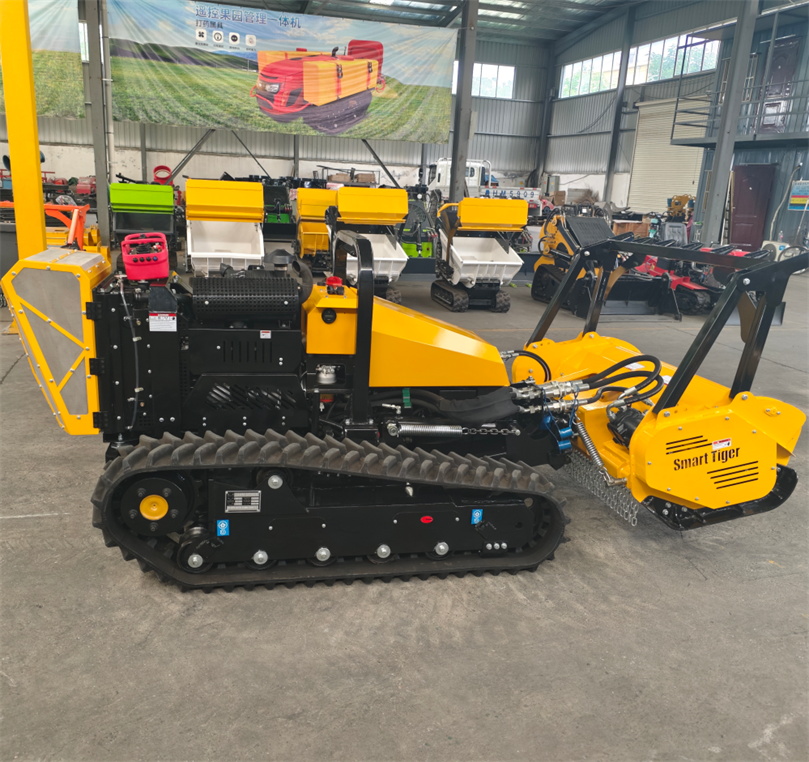
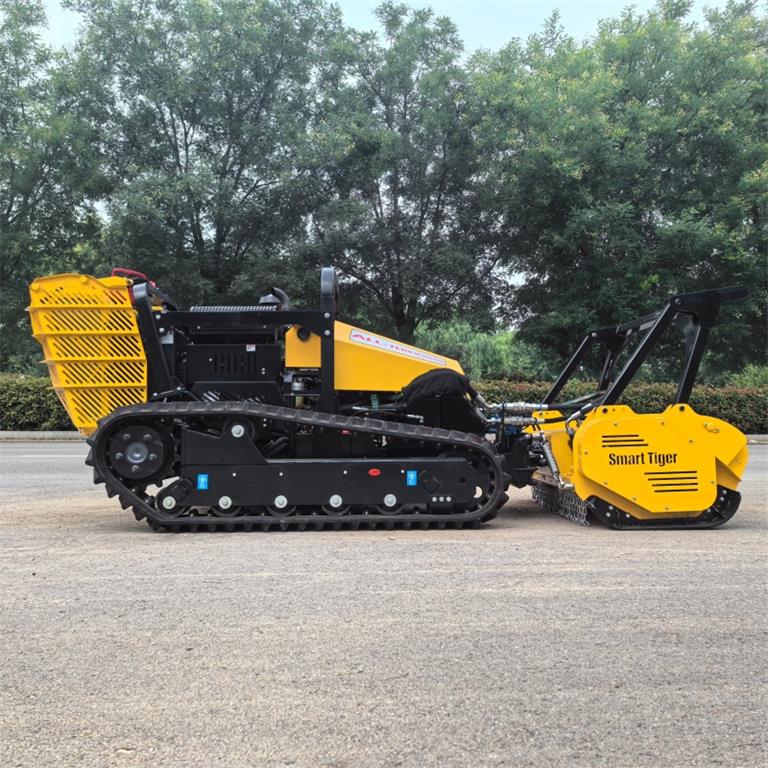
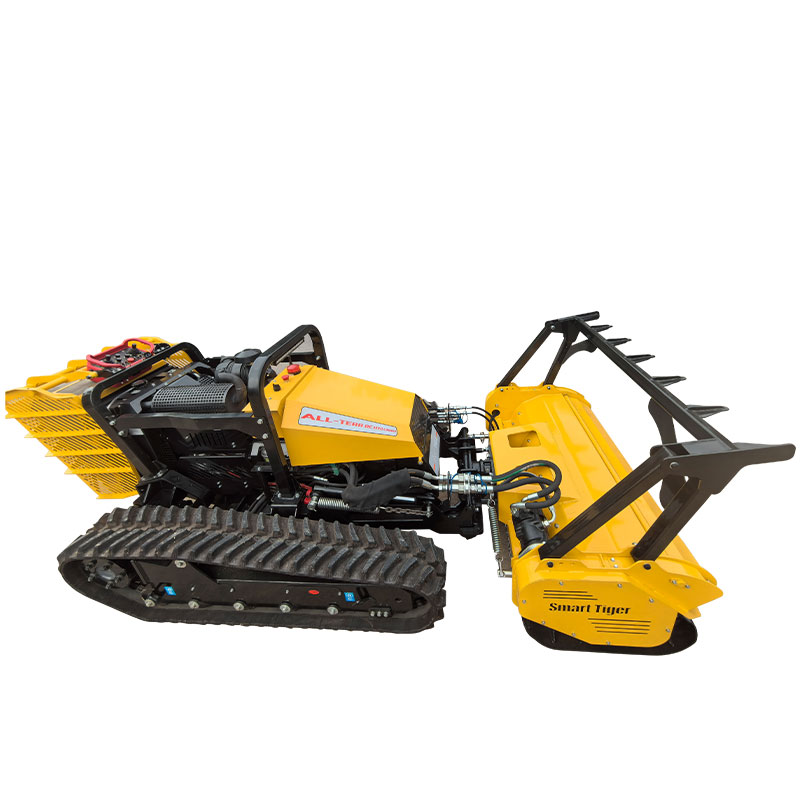
Crawler Crusher
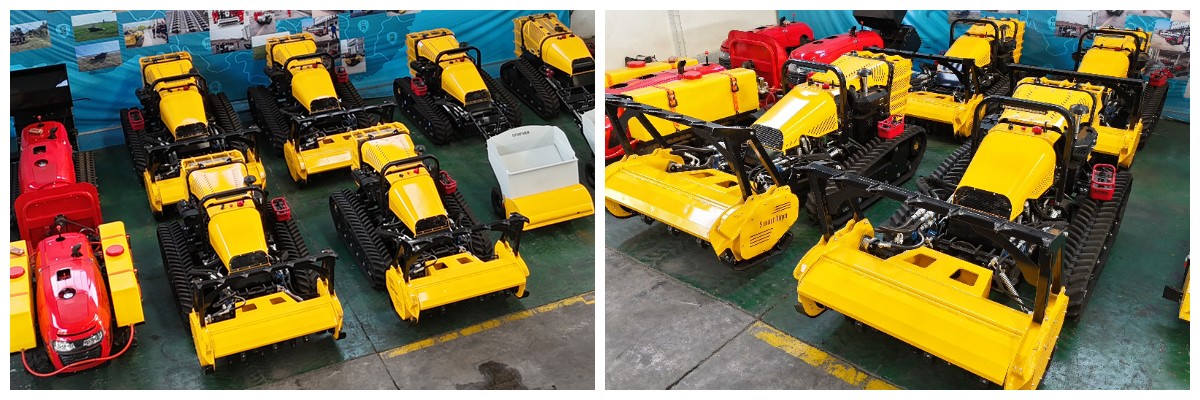
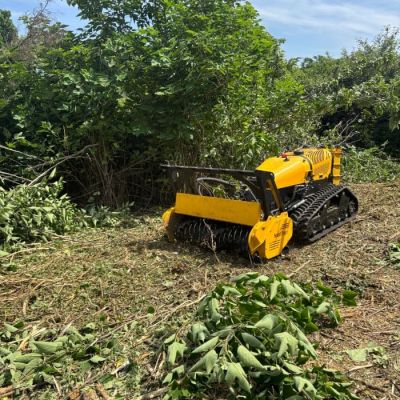
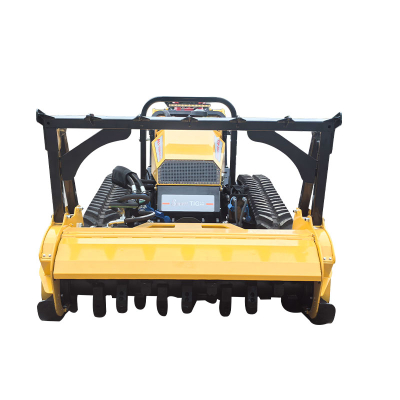
Equipped with 27 tungsten steel tools that rotate at 2500rpm with a high torque of 107.1Nm, the chipper can handle materials with a maximum crushing diameter of 100mm, while the tool rotation direction is bidirectionally adjustable from 0-100% steplessly for flexible operation. Its 1200mm working width and 20mm topsoil backfilling depth significantly enhance work efficiency.
A Crawler Crusher is a mobile, track‑driven machine that integrates a high‑powered crushing unit onto a rugged undercarriage. Unlike static crushers that require concrete foundations and permanent installation, the crawler crusher moves independently across rough terrain, climbs onto stockpiles, and positions itself precisely at the demolition face. Powered by a diesel engine or an electric‑over‑hydraulic system, the crawler crusher feeds material through a jaw, impact, or cone crusher chamber, producing uniform aggregate sizes for reuse or sale. For B2B contractors and plant managers, owning a crawler crusher means turning demolition waste or blasted rock into valuable fill, base course, or drainage stone without intermediate haulage.
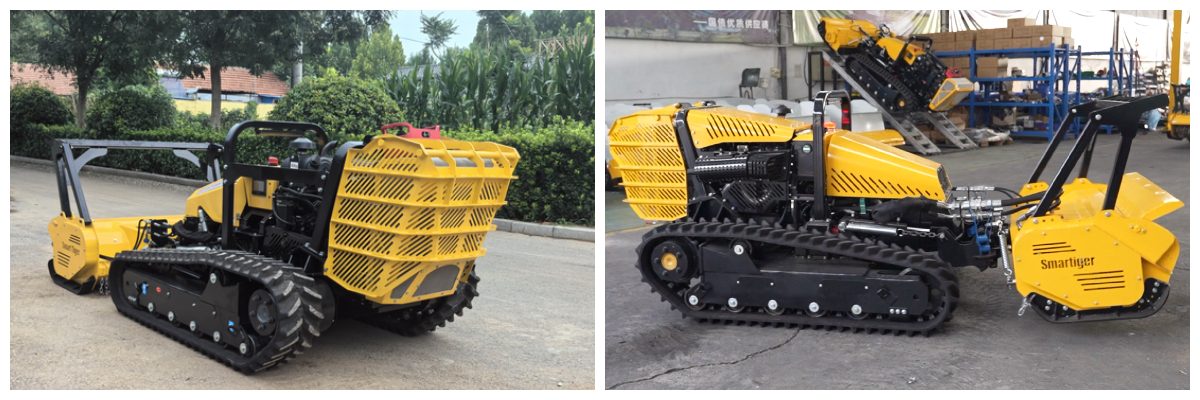
Key Selling Points – Why Professionals Choose a Crawler Crusher
1. True Mobility on Heavy‑Duty Rubber Tracks
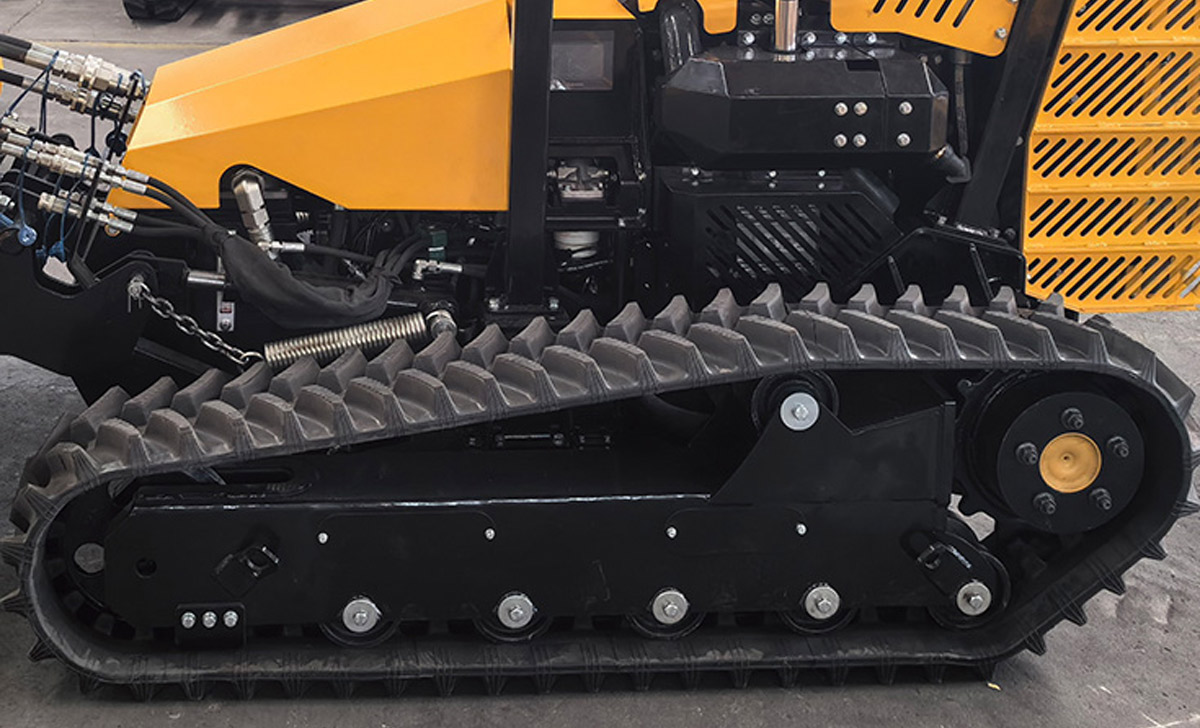
The crawler crusher is built on a reinforced track chassis with wide, heat‑resistant rubber pads. This design distributes weight evenly, reducing ground pressure and protecting paved surfaces or sensitive subgrades. The machine can climb slopes up to 25°, navigate through muddy laydown yards, and reposition under its own power in minutes. No trailer, no crane, no time wasted – the crawler crusher moves where the work is.
2. Powerful Crushing Chambers for Diverse Materials
A professional crawler crusher offers interchangeable crushing configurations. Jaw crushers handle reinforced concrete and river rock up to 600 mm feed size. Impact crushers produce cubical aggregate for road base. Cone crushers deliver fine fractions for asphalt or railway ballast. Regardless of the chamber, the crawler crusher maintains a steady, adjustable closed‑side setting, giving operators control over final product size from 10 mm to 150 mm.
3. Advanced Feeding & Magnetic Separation
Most crawler crusher models include a vibrating grizzly feeder that removes fine dirt and undersize material before it enters the crushing chamber, reducing wear and increasing throughput. A cross‑belt magnet automatically extracts rebar, wire mesh, and tramp iron from the crushed output, producing clean aggregate ready for resale. This integrated system makes the crawler crusher a complete mobile recycling plant.
4. Remote Control & On‑Board Diagnostics
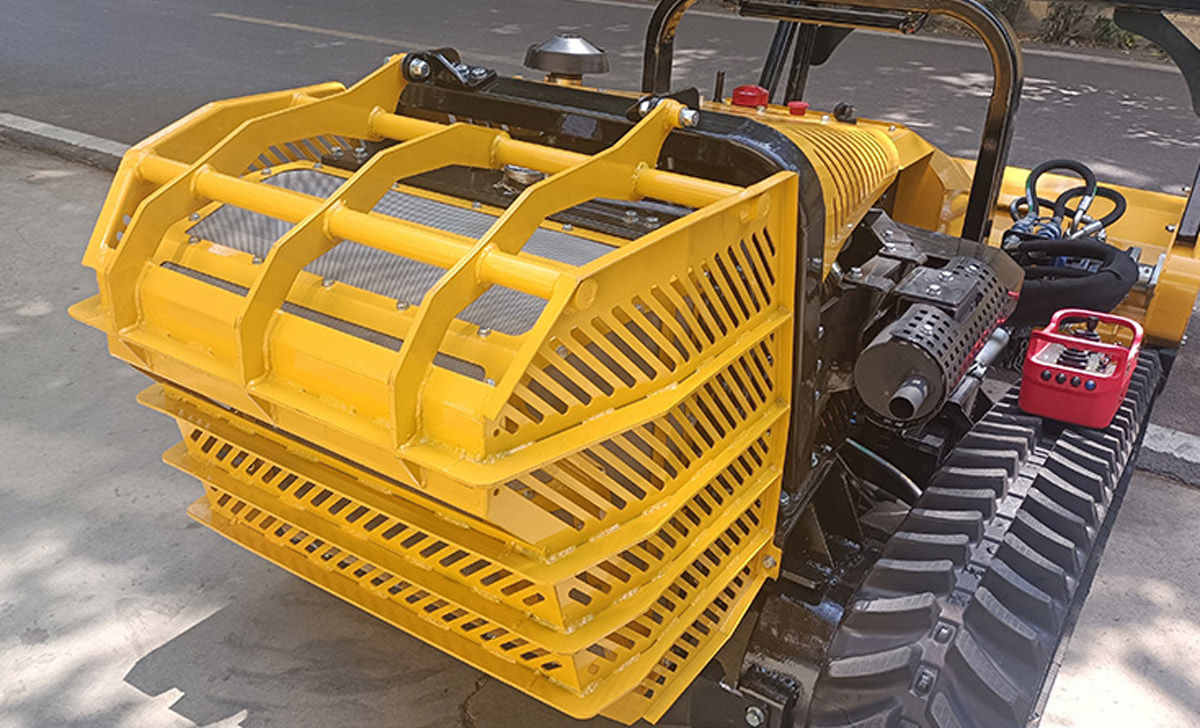
To improve operator safety, many crawler crusher units feature wireless remote control for tracking, feeder speed, and crusher settings. On‑board diagnostics track hydraulic pressures, engine temperatures, and liner wear, sending alerts to a central display or mobile device. This smart functionality minimises downtime and allows one operator to manage multiple machines.
|
|
|
|
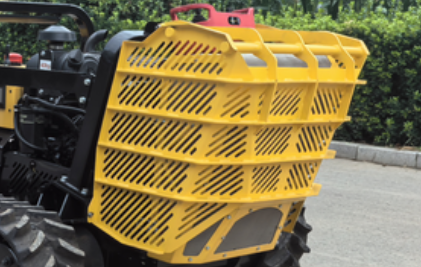
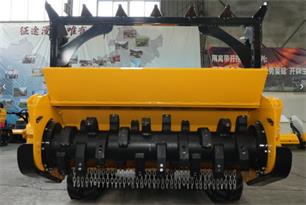
Technical Parameters
Parameter | Specification | Parameter | Specification |
Model | HYZH-40 | Pressure | 250bar |
Engine Brand | YANMAR | Headlight | LED |
Fuel | Diesel | Tool Rotation Speed | 2500rpm |
Fuel Tank Capacity | 28L | Tool Rotation Direction | Forward and reverse (bidirectional 0-100% stepless adjustable) |
Torque | 107.1Nm | Control of Attachment Front Cover Opening/Closing | Remote control |
Fuel Injection Method | Direct injection | Tool Material | Tungsten steel |
Rated Power | 28.2Kw | Working Width | 1200mm |
Transmission Mode | Hydrostatic precision control | Number of Tools | 27 |
Cooling Method | Oil-air hybrid cooling | Crushing Diameter | 100mm |
Vertical Obstacle Crossing Height | 500mm | Forearm Lifting Height | -200mm to 500mm |
Wading Depth | 500mm | Supported Slope | Meets working conditions with a slope angle of 55° |
Departure Angle | 30° | Dimensions | 3230mm × 1450mm × 1420mm |
Straight-line Deviation Angle | 0.3% | Self-weight | 1840kg |
Topsoil Backfilling Depth | 20mm | Maximum Traction Force | 25KN |
Working Distance of Remote Control System | >150m | Ground Clearance | 170mm |
Allowed Operating Inclination Angle | 60° in any direction (after engine optimization) | Attachment Terrain Matching | Yes (matches terrain undulations within ±10°) |
Hydraulic Pump | Piston pump + gear pump | Steering | Skid steering, supporting in-place steering |
Drive Motor | High-torque motor | System Allowed Operating Inclination Angle | ≥80° in any direction (after hydraulic system optimization) |
Hydraulic Tank Capacity | 26L (40L in the system) | Hydraulic Flow of Reclamation Attachment | 84L/min |
Stepless Speed Control | Working speed: forward/reverse 0-4 Km/h; Transfer speed: forward/reverse 0-10.2 Km/h | Parking Mode | Remote control. The parking switch ensures stable parking of the equipment. The parking knob enables on-site parking and electronic handbrake function, effectively ensuring safety, preventing sliding, and avoiding safety accidents caused by misoperation. |
Rubber Track (Standard) | High-tooth rubber track (supports 55° slope working conditions). Special working condition rubber track with teeth twice as high as ordinary/common tracks on the market, achieving strong grip, friction, and adaptability to various terrains | Proportional Joystick | Supports joystick direction switching for convenient operation when driving with the front or rear of the machine forward. Direction switching (forward/reverse) can be realized via the knob switch, which is more efficient without the need for U-turn. |
Frequency | 2.4G | Battery | 2 built-in rechargeable lithium batteries per unit, supporting self-charging |
Core Advantages – How a Crawler Crusher Outperforms Static Plants & Conventional Equipment
| Traditional Method | Crawler Crusher Advantage |
Fixed crushing plant + dump trucks | Eliminate haulage costs; process material on site |
Excavator with breaker hammer | Continuous crushing vs. intermittent hammering; uniform product size |
Portable wheeled crusher | Better traction on soft ground; lower ground pressure; steeper working grade |
Manual sorting & downsizing | Reduce labour by 80%; increase daily output from tonnes to hundreds of tonnes |
Additional advantages for B2B buyers:
Lower carbon footprint – On‑site crushing eliminates dozens of truck trips per day.
Higher resale value of products – Clean, graded aggregate commands better prices than mixed rubble.
Quicker site demobilisation – No concrete pads or electrical hookups to remove.
Increased safety – Fewer machines and people moving around the crushing zone.
For demolition contractors, civil earthworks companies, and mining sub‑contractors, investing in a crawler crusher typically pays for itself within 6–12 months of regular use, based on avoided haulage and purchased aggregate costs.
Optional Attachments
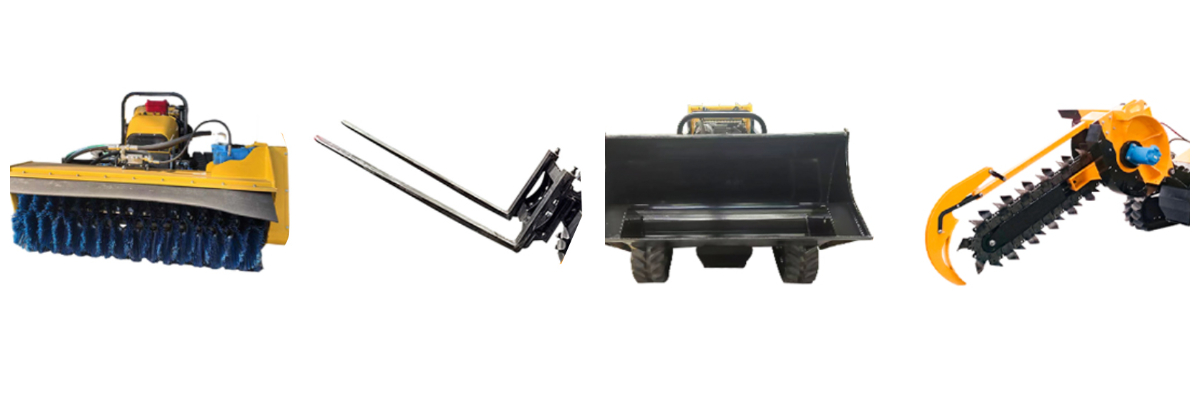
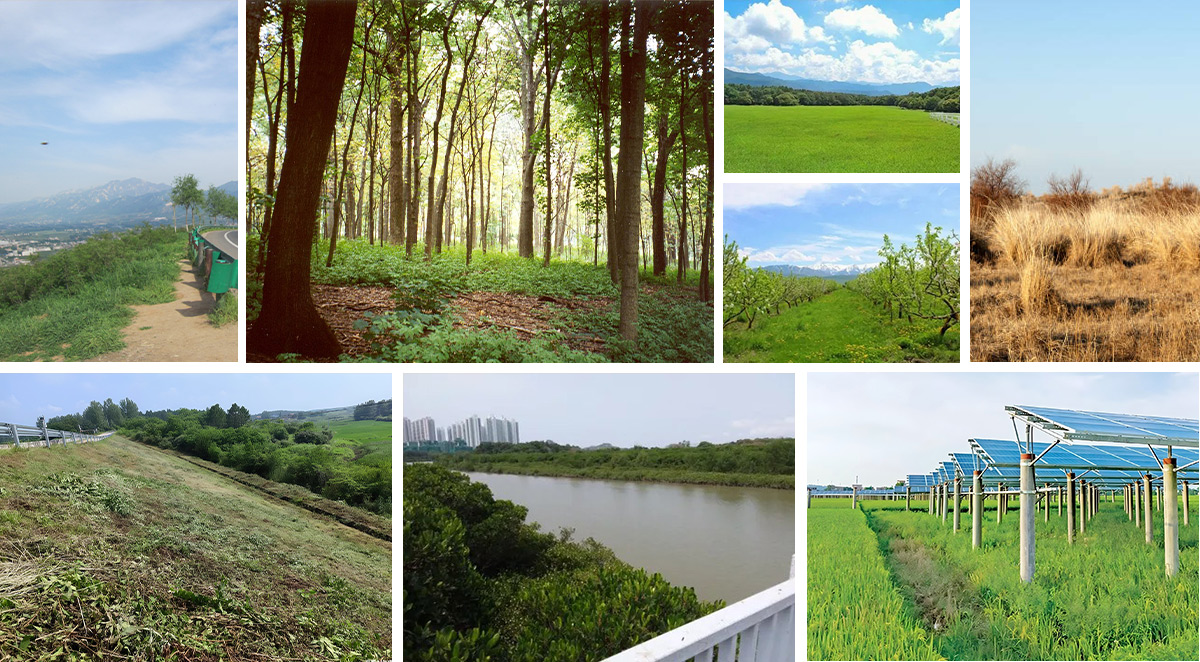
Application Scenarios – Where the Crawler Crusher Delivers Maximum Value
Demolition Debris Recycling (Primary Focus)
Problem: Large‑scale demolition projects generate thousands of tonnes of concrete, brick, and block. Transporting this material to a remote recycling facility costs
15–30 per tonne and adds significant carbon emissions. Meanwhile, the project still needs imported fill or base course.
Solution: A crawler crusher is positioned directly next to the demolition pile. An excavator feeds rubble into the crusher’s hopper, and the machine produces 50 mm minus recycled concrete aggregate (RCA) on the spot. This RCA is immediately used as backfill, temporary roads, or structural fill under new slabs. The crawler crusher turns a costly waste stream into a valuable site resource, often saving the contractor over $100,000 per large project.
Quarry & Pit Operations
In small‑ to medium‑sized quarries, a crawler crusher serves as a primary or secondary crusher without the expense of a fixed plant. The machine tracks directly to the blast face, processes shot rock, and then moves to the next bench. Because it is mobile, the crawler crusher reduces load‑and‑haul distances by two‑thirds compared to feeding a stationary plant. Quarry owners appreciate the ability to relocate the crusher seasonally or for different product lines.
Road & Highway Construction
Road builders use a crawler crusher to recycle old asphalt pavement (RAP) and concrete slabs from bridge demolition. The crushed RAP is blended with virgin binder to produce recycled hot mix. Concrete slabs become graded aggregate base. Because the crawler crusher works directly on the right‑of‑way, there is no need for double handling or off‑site processing – a critical advantage in congested urban reconstruction projects.
Mining & Overburden Reduction
In surface mining of coal, gypsum, or industrial minerals, a crawler crusher reduces overburden or run‑of‑mine material to a manageable size before conveying or stacking. The machine’s low ground pressure allows it to operate on reclaimed tailings or soft pit floors. Mine operators prefer the crawler crusher because it can be moved between pits without dismantling, maintaining continuous production.
Natural Disaster Cleanup
After earthquakes, floods, or storms, enormous piles of mixed debris – concrete, timber, masonry – block roads and fill drainage channels. A crawler crusher rapidly downsizes this material, allowing recovery of scrap metal (via magnet) and production of fill to restore access. The mobility of the crawler crusher is essential in chaotic disaster zones where fixed plants have been destroyed.
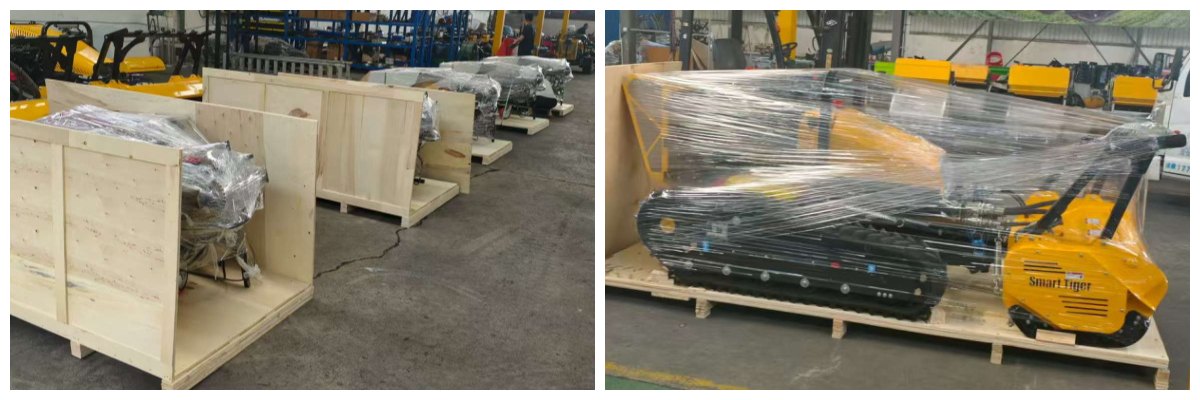
Professional Packaging Assurance for Remote-Controlled Outdoor Machinery
Hermetic Dust-Proof & Moisture-Proof Encapsulation: Each unit of the is meticulously encapsulated with high-tensile transparent plastic film, complemented by heat-sealing technology. This full-coverage hermetic wrapping effectively isolates the equipment from dust, moisture, and incidental minor abrasions, thereby preserving the pristine condition of both external surfaces and internal components throughout handling and transit.
Palletized Foundation for Stable & Streamlined Handling: All equipment units are firmly affixed to heavy-duty wooden pallets. Beyond ensuring structural stability during stacking and long-haul transportation, this palletization solution facilitates seamless loading, unloading, and forklift maneuvering at ports, warehouses, and job sites—substantially enhancing logistics efficiency for our business partners.
Reinforced Heavy-Duty Wooden Crating (For Long-Distance/International Shipments): For long-distance or international logistics, all four types of equipment are fully enclosed in reinforced wooden crates. Fabricated from premium solid wood and reinforced with corrosion-resistant metal fasteners, these crates offer exceptional resistance to impact, compression, and other potential hazards inherent in international shipping, such as rough handling and transit vibration.
This multi-tiered, customized packaging solution comprehensively mitigates transit risks. We are dedicated to ensuring that every piece of equipment reaches our clients in a fully protected, damage-free state, ready for immediate deployment in diverse outdoor operational scenarios.
Frequently Asked Questions (FAQ)
Q1 – Can a crawler crusher handle reinforced concrete with heavy rebar?
A: Yes. A properly equipped crawler crusher with a jaw crusher chamber is designed to accept rebar‑laden concrete. The jaw plates crush the concrete while leaving the rebar in long, bendable strands. After crushing, the built‑in cross‑belt magnet removes virtually all ferrous metal. The small amount of remaining rebar is typically fine enough to pass through the crusher without damaging downstream equipment. For heavily reinforced beams, we recommend a pre‑shear or excavator‑mounted pulveriser to reduce material size before feeding into the crawler crusher.
Q2 – What power options are available: diesel, electric, or hybrid?
A: Most crawler crusher models come with a Tier 4 Final / Stage V diesel engine producing 150–400 kW. However, we also offer electric‑driven versions for indoor or urban projects with strict emissions limits. Hybrid models use a diesel generator to power electric crusher drives, reducing fuel consumption by up to 30% compared to pure hydraulic‑driven crushers. Please specify your site power availability and local regulations when requesting a quote.
Q3 – How often do wear parts (jaw plates, impact blow bars) need replacement?
A: Wear life depends entirely on the material being crushed. For abrasive materials like granite or basalt, jaw plates may last 400–800 hours. For recycled concrete or soft limestone, the same parts can exceed 1,500 hours. A crawler crusher is designed for quick wear part changeouts: jaw plates can be reversed or replaced in 4–6 hours by two technicians. We stock OEM wear parts in regional warehouses (Europe, North America, Southeast Asia) with standard delivery of 2–5 days.
Q4 – Do you provide operator training and remote technical support for international buyers?
A: Absolutely. Every crawler crusher purchase includes a site‑specific training package: one day of on‑site commissioning and operator familiarisation, plus a library of video tutorials covering daily checks, crusher setting adjustments, and wear part replacement. For ongoing support, we offer remote diagnostics via secure internet connection to the machine’s PLC. Spare parts lists, hydraulic schematics, and electrical diagram