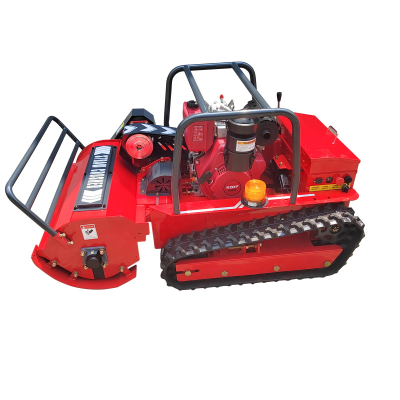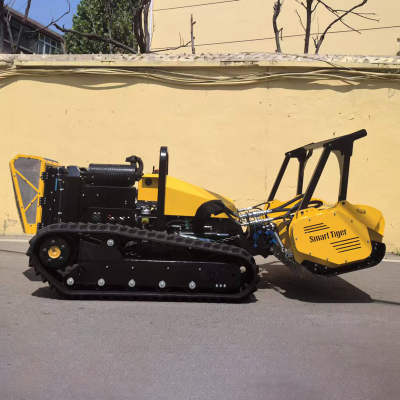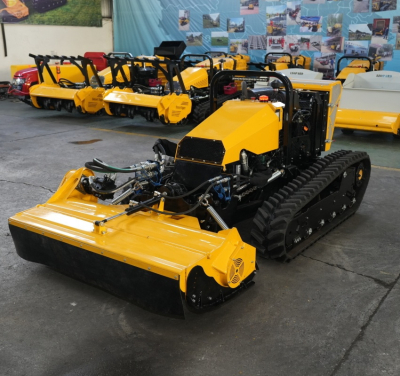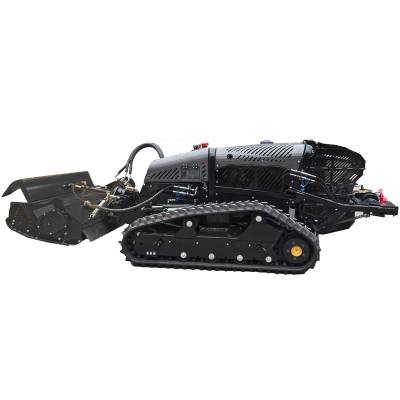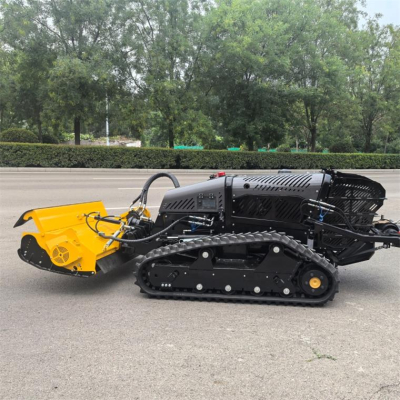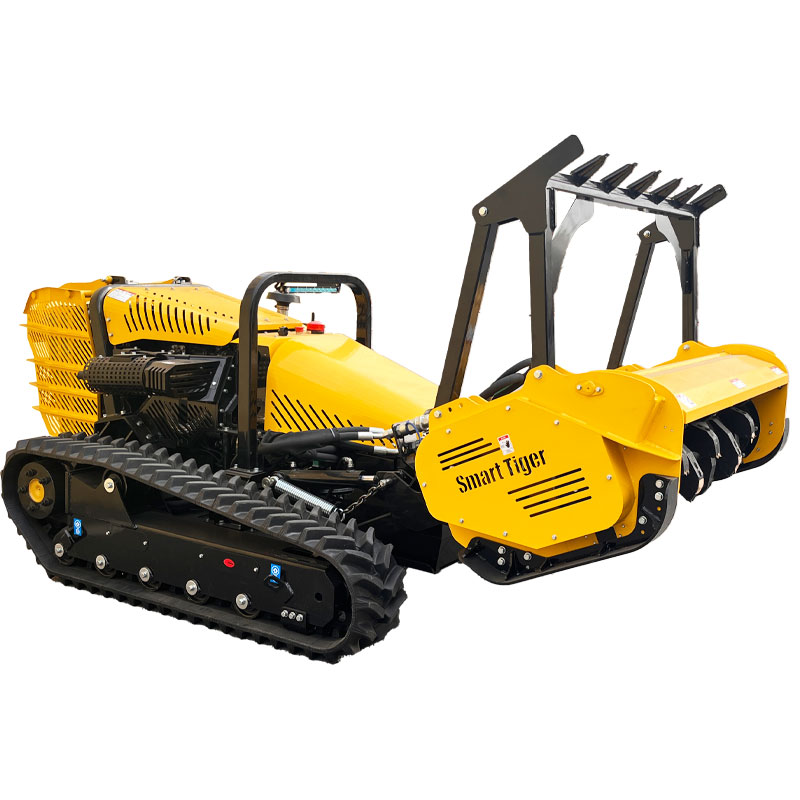
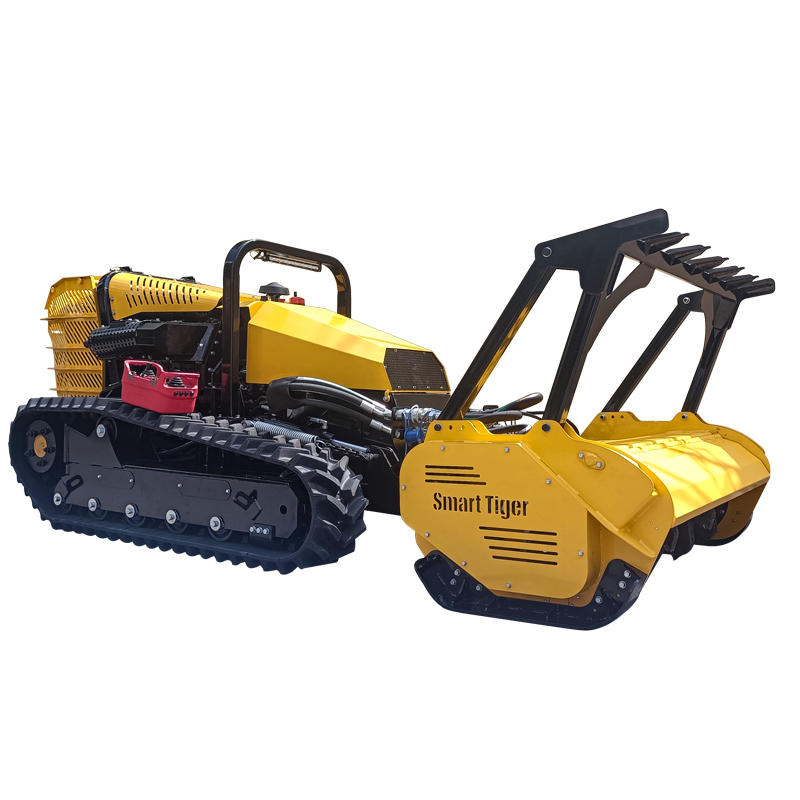
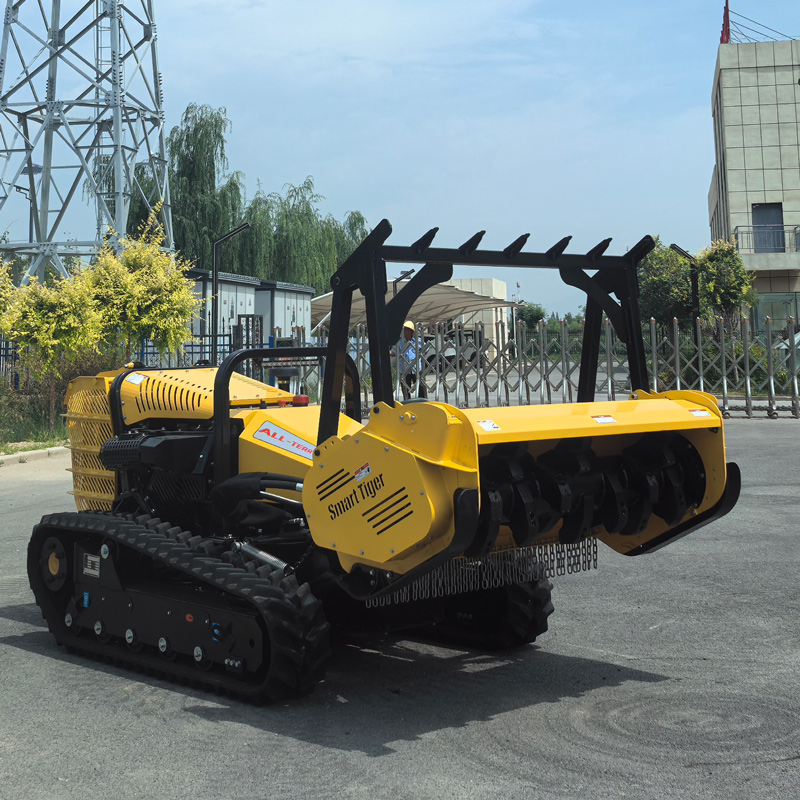
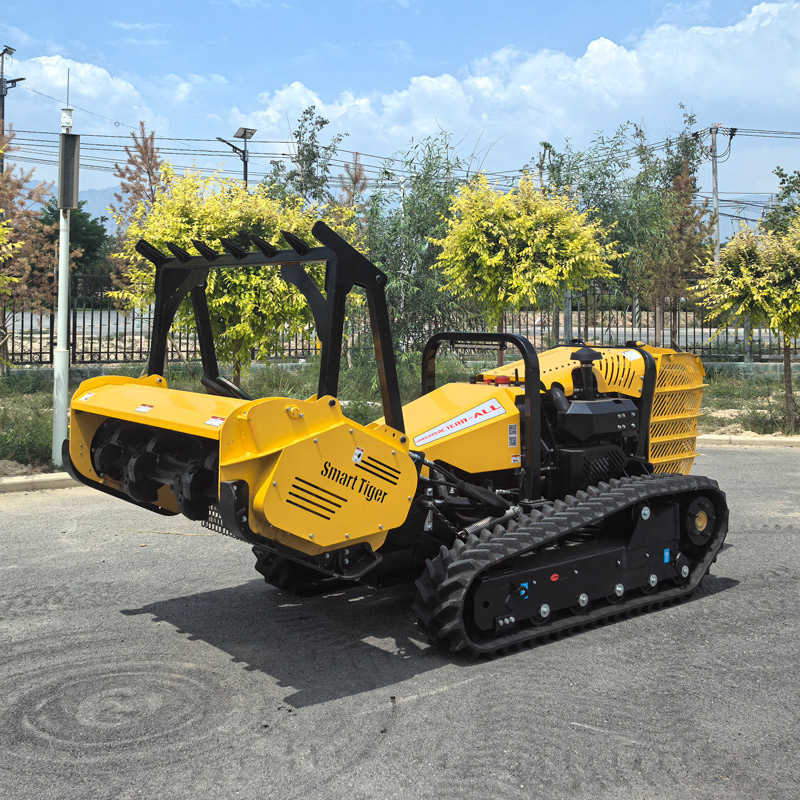
Remote Control Slope Lawn Mower
Our Remote Control Slope Lawn Mower (specialized for steep-terrain turf care/vegetation management) and Tracked Remote Control Lawn Mower (track-equipped for enhanced slope stability) share core strengths of power, safety, and precision:
Remote-Controlled Operation: Both support over 150m wireless control for safe, precise handling in extreme environments (steep slopes, uneven terrain), keeping operators away from slip/fall risks;
Product Introduction
The Remote Control Slope Lawn Mower is a specialized machine engineered for one of the most demanding challenges in land maintenance: safe and efficient mowing on steep slopes, uneven terrain, and hard‑to‑reach areas. Unlike conventional ride‑on or walk‑behind mowers that put operators at risk of slipping, tipping, or falling, this remote‑controlled machine allows a single user to stand on level, stable ground while the Remote Control Slope Lawn Mower climbs, cuts, and mulches vegetation on inclines that would be impossible or extremely dangerous to work manually.
Designed for professional contractors, municipal roadside crews, vineyard managers, and large‑estate groundskeepers, the Remote Control Slope Lawn Mower combines a low‑centre‑of‑gravity track chassis, a powerful diesel engine, and an advanced hydrostatic transmission. All of these components are managed through a rugged wireless transmitter with a range exceeding 150 metres. Whether you need to maintain a highway embankment, a dam face, a golf course bunker slope, or a vineyard hillside, the Remote Control Slope Lawn Mower delivers consistent, high‑quality cutting without compromising operator safety.
In this detailed guide, we will explore the core strengths of the Remote Control Slope Lawn Mower, its most valuable applications across different industries, and answer the most frequent questions from B2B buyers.
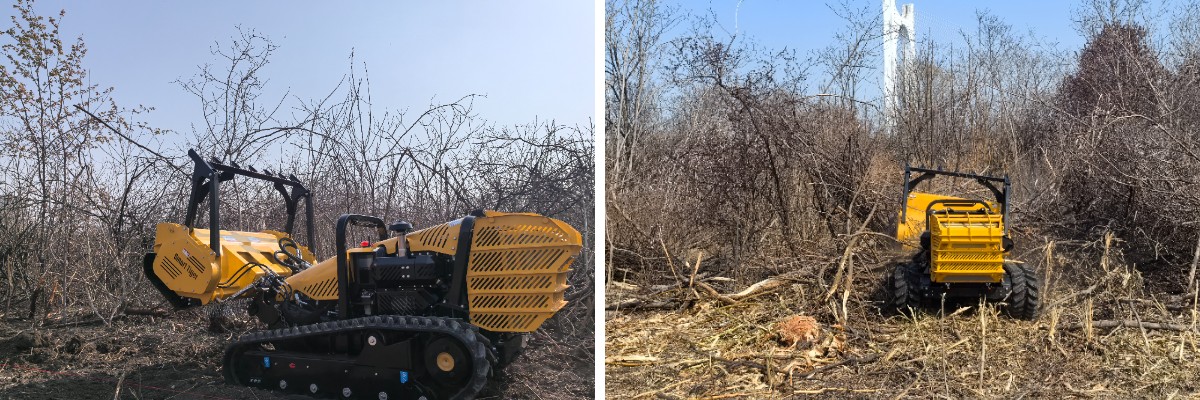
Core Advantages – Why Professionals Choose a Remote Control Slope Lawn Mower
1. Long‑Range Wireless Control for Maximum Safety
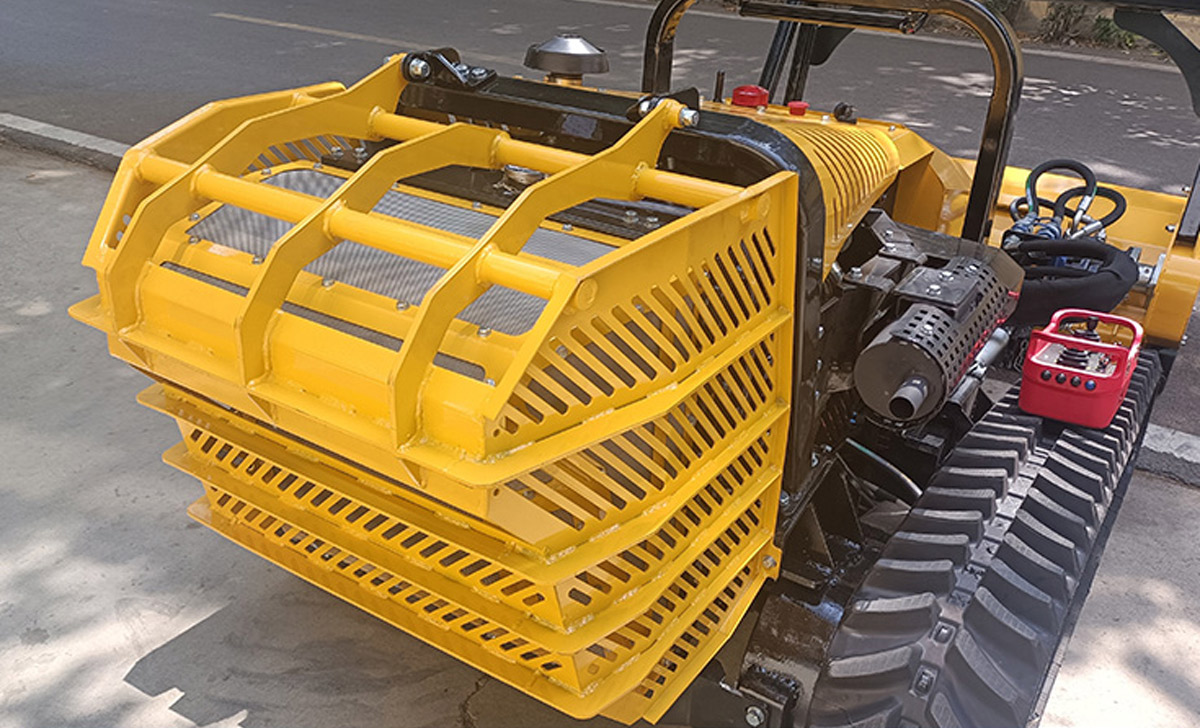
The defining feature of the Remote Control Slope Lawn Mower is its industrial‑grade radio control system, offering a reliable line‑of‑sight range of over 150 metres. This extended range allows operators to position themselves well away from slip, trip, and fall hazards. On a steep slope, the operator simply stands at the top or bottom of the incline – on firm, level ground – and steers the machine using a handheld transmitter with intuitive joystick controls. The transmitter provides precise steering, variable cutting height adjustment, and an emergency stop button. In the event of signal loss or low battery, the Remote Control Slope Lawn Mower automatically halts all movement and engages the parking brake. For contractors who bid on roadside or dam projects, this remote capability virtually eliminates the risk of slope‑related injuries, reducing liability and insurance costs while improving crew morale.
2. Engineered for Extreme Slopes & Uneven Terrain
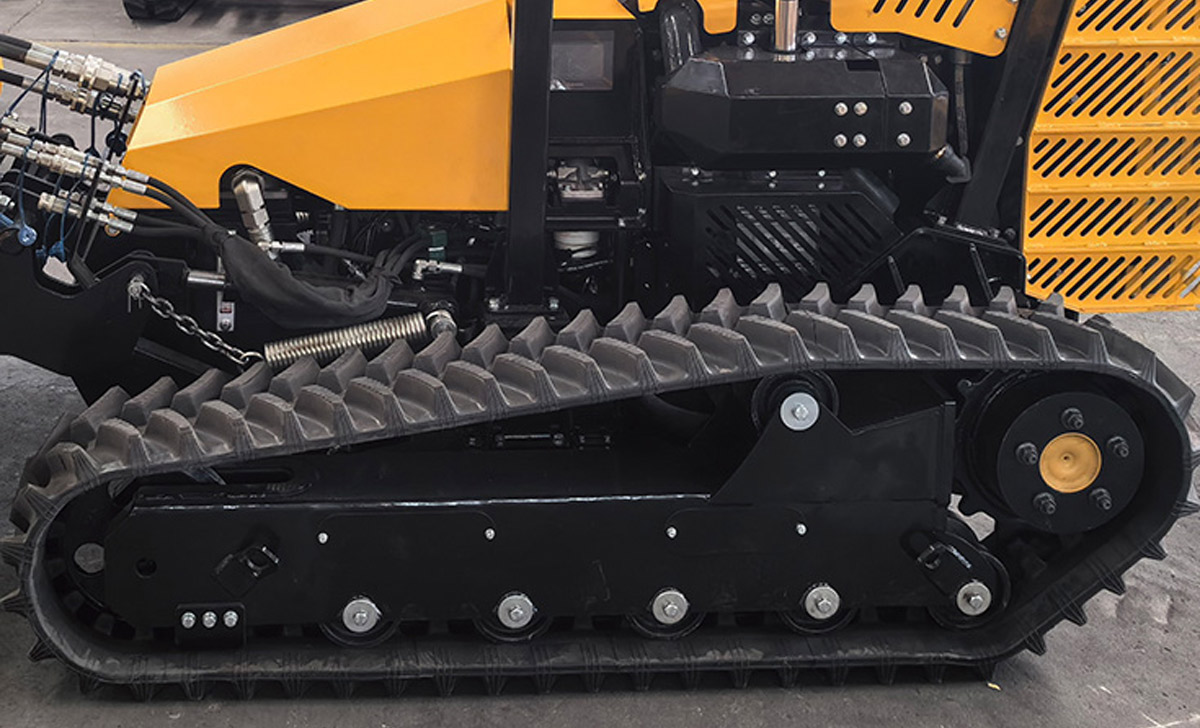
Unlike standard mowers that struggle on gradients above 20°, the Remote Control Slope Lawn Mower is built with a low centre of gravity, wide rubber tracks, and a specially tuned suspension that keeps all tracks in contact with the ground. Depending on the model, this machine can operate safely on slopes up to 55° (120% grade) – far beyond the capabilities of any ride‑on or push mower. The rubber tracks provide superior traction on wet grass, loose soil, and even light gravel. When traversing uneven terrain riddled with rocks, roots, or ruts, the Remote Control Slope Lawn Mower maintains stability and cutting uniformity, preventing scalping or blade damage.
3. Powerful & Efficient Drivetrain
Under the hood, the Remote Control Slope Lawn Mower is powered by a reliable diesel engine (typically 25–35 kW, such as a Yanmar or Changchai) coupled with a maintenance‑free hydrostatic transmission. This combination delivers infinitely variable travel speeds (0–8 km/h) and independent track control, enabling zero‑radius turns and precise manoeuvring on confined slopes. The diesel engine offers low fuel consumption (approximately 2–4 litres per hour under load) and long service intervals, keeping operating costs low. The hydrostatic drive eliminates belts, clutches, and gearboxes that would wear out quickly on steep, dusty sites.
4. Versatile Cutting & Mulching Performance
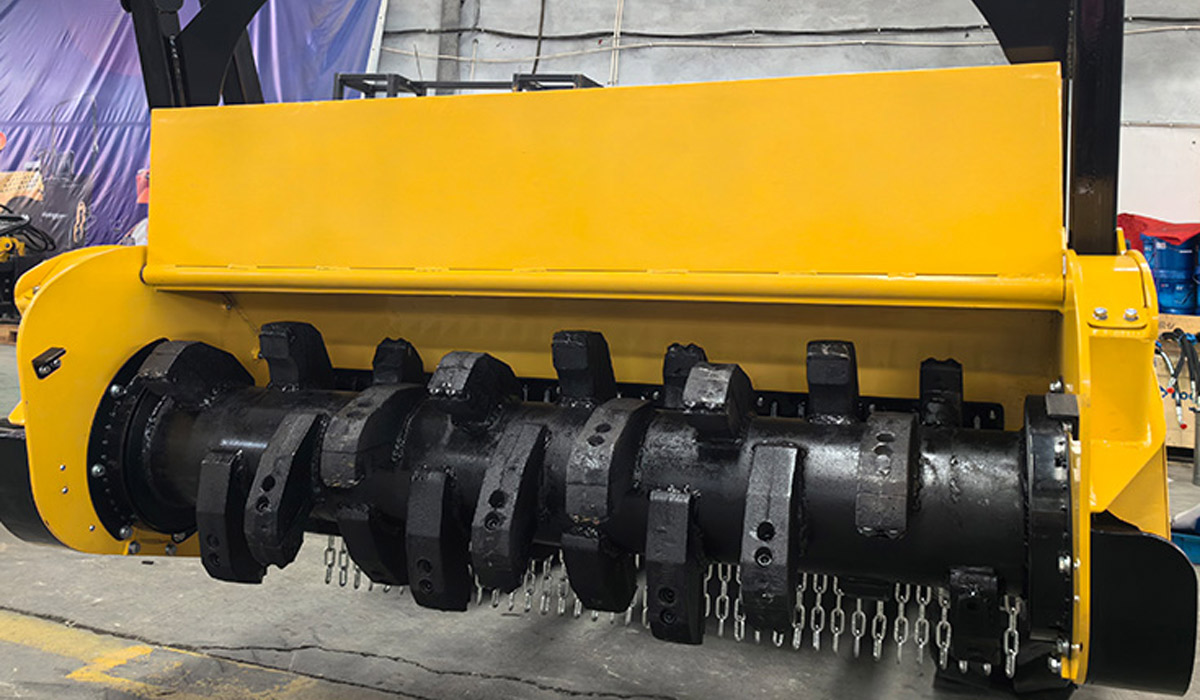
The Remote Control Slope Lawn Mower is available with a range of cutting decks and flail mulcher heads, with working widths from 800 mm to 1,500 mm. The standard configuration includes a heavy‑duty flail mulcher with carbide‑tipped or serrated blades that slice through grass, weeds, brambles, and light brush (up to 50 mm diameter). The cutting height is adjustable (typically 25–150 mm) via the remote control. The mulching action returns fine clippings to the soil, reducing the need for post‑mowing cleanup and adding organic matter to the slope. For heavier vegetation such as saplings or dense thickets, an optional forestry mulcher head can be fitted to the same chassis.
5. Low Ground Pressure & Minimal Site Disturbance
Thanks to its wide rubber tracks, the Remote Control Slope Lawn Mower exerts a ground pressure of less than 0.35 kg/cm² – similar to a human footprint. This allows the machine to work on soft, wet slopes, freshly seeded areas, or environmentally sensitive sites without causing ruts or compaction. For wetland restoration projects or golf course slopes, this low‑impact design is a major advantage over wheeled alternatives.
Key Application Scenarios
1. Roadside & Highway Embankment Maintenance
The challenge: Highway shoulders, bridge approach slopes, and drainage ditches are often steep, littered with debris, and close to fast‑moving traffic. Traditional mowing methods – manual brush cutters or tractor‑mounted rotary mowers – are slow, dangerous, and often result in accidents.
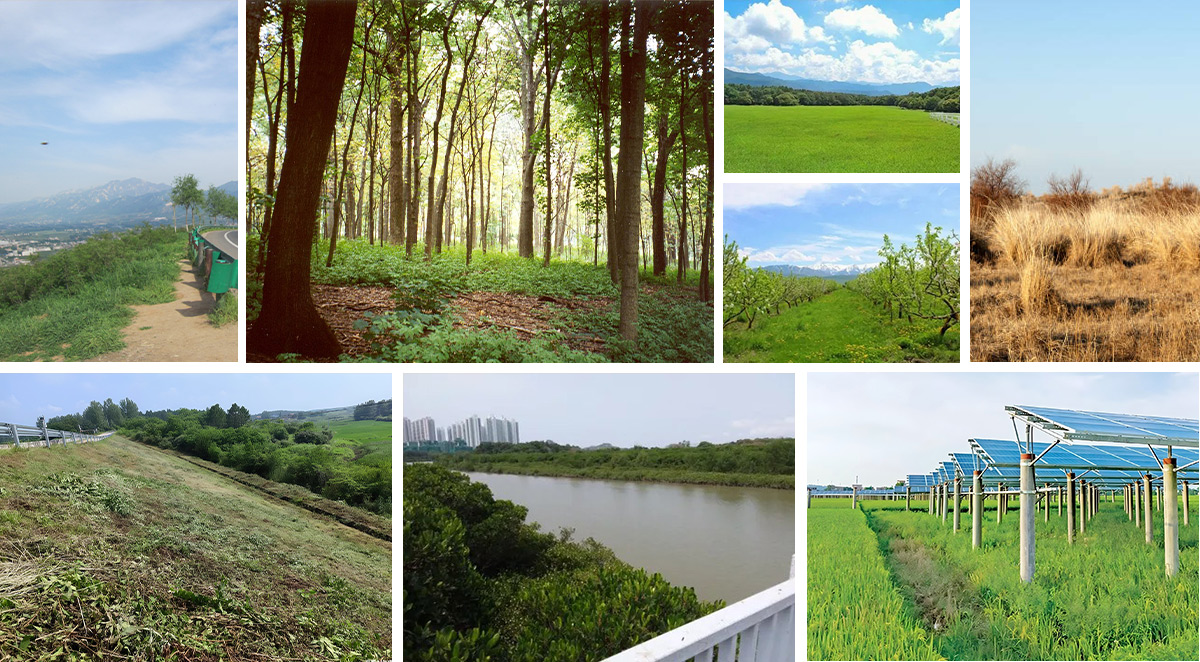
How the Remote Control Slope Lawn Mower solves it: The operator stands on the paved shoulder or behind a safety barrier, well away from passing vehicles. Using the remote, they guide the Remote Control Slope Lawn Mower up the 35°–50° embankment. The machine climbs, cuts, and mulches the vegetation in a single pass. The fine clippings stay on the slope, reducing erosion. Municipal road departments have reported a 70% reduction in slope‑mowing labour hours and zero traffic‑related incidents after adopting the Remote Control Slope Lawn Mower.
2. Dam & Levee Grass Management
The challenge: Earthen dams and flood control levees require regular mowing to maintain structural integrity (roots of woody plants can damage the core) and to allow visual inspections. However, these structures often have steep, long slopes that are extremely hazardous for ride‑on mowers.
How the Remote Control Slope Lawn Mower solves it: The machine’s low centre of gravity and high slope rating allow it to traverse the full height of the dam from crest to toe. The operator remains on the crest or at the base, safely away from the steep face. The hydrostatic drive provides smooth, creeping speed control, ensuring a consistent cut even on long, unbroken slopes. Many water authorities now specify remote‑controlled mowers for dam maintenance in their tender documents.
3. Vineyards & Orchards on Hillsides
The challenge: Vineyards planted on hillsides have narrow rows, low trellises, and slopes that make traditional tractor mowing inefficient and risky. Manual mowing with handheld equipment is back‑breaking and slow.
How the Remote Control Slope Lawn Mower helps: With a narrow profile (often under 1.2 metres) and zero‑turn capability, the Remote Control Slope Lawn Mower navigates between vine rows effortlessly. The operator stands at the row end and guides the machine up and down the slope using the remote. Adjustable cutting height protects the vine trunks and low‑hanging fruit. The mulched cover crop is returned to the soil as green manure. Vineyard managers have cut mowing time by half and eliminated slope‑related worker injuries.
4. Golf Course & Sports Field Banks
The challenge: Golf course bunker faces, fairway mounds, and lake banks are often too steep for standard fairway mowers. These areas become overgrown and unsightly, and manual trimming is time‑consuming.
How the Remote Control Slope Lawn Mower solves it: The machine’s gentle footprint and precise remote control allow it to trim bunker slopes without entering the sand trap. On lake banks, the operator can stay on the flat path while the machine cuts the waterward slope. The fine mulch disappears into the rough, leaving a manicured appearance. Superintendents value the Remote Control Slope Lawn Mower for its ability to maintain “impossible” slopes to a high aesthetic standard.
5. Mining Reclamation & Sloped Waste Piles
The challenge: After mining operations, reclamation slopes and waste rock piles must be vegetated and maintained. These slopes are often composed of loose, abrasive material with scattered rocks – extremely hostile to conventional mowing equipment.
How the Remote Control Slope Lawn Mower helps: The reinforced rubber tracks and heavy‑duty flail deck withstand impact from small rocks. The remote control keeps the operator away from unstable, loose surfaces. The mulching action helps bind soil and reduce erosion. Reclamation contractors using the Remote Control Slope Lawn Mower have successfully maintained slopes that were previously considered un‑mowable.
Frequently Asked Questions (FAQ) – Remote Control Slope Lawn Mower
Q1 – How does the remote control perform on slopes with trees or dense brush?
A: The radio system operates on industrial frequencies (2.4 GHz or 868 MHz) with frequency hopping and error‑checking protocols. In dense vegetation or among scattered trees, the effective range is typically 100–150 metres; in open fields, it exceeds 200 metres. If the signal is lost for more than two seconds, the Remote Control Slope Lawn Mower automatically stops all drive and cutting functions and applies the parking brake. The machine will not move until the signal is restored and the operator manually re‑engages the controls – a certified fail‑safe design.
Q2 – What maintenance does the Remote Control Slope Lawn Mower require?
A: Routine maintenance includes:
Engine: Oil and filter change every 100–150 hours (use 15W‑40 diesel oil).
Hydraulic system: Check fluid levels every 200 hours; full change every 500 hours.
Tracks: Inspect tension every 50 hours; adjust using the grease‑type tensioner.
Cutting flails: Inspect daily for wear; rotate blades every 50–80 hours; replace after 200–300 hours depending on abrasiveness.
Battery & transmitter: Recharge transmitter battery after each use (8–12 hour runtime). Store the transmitter in a dry, cool place.
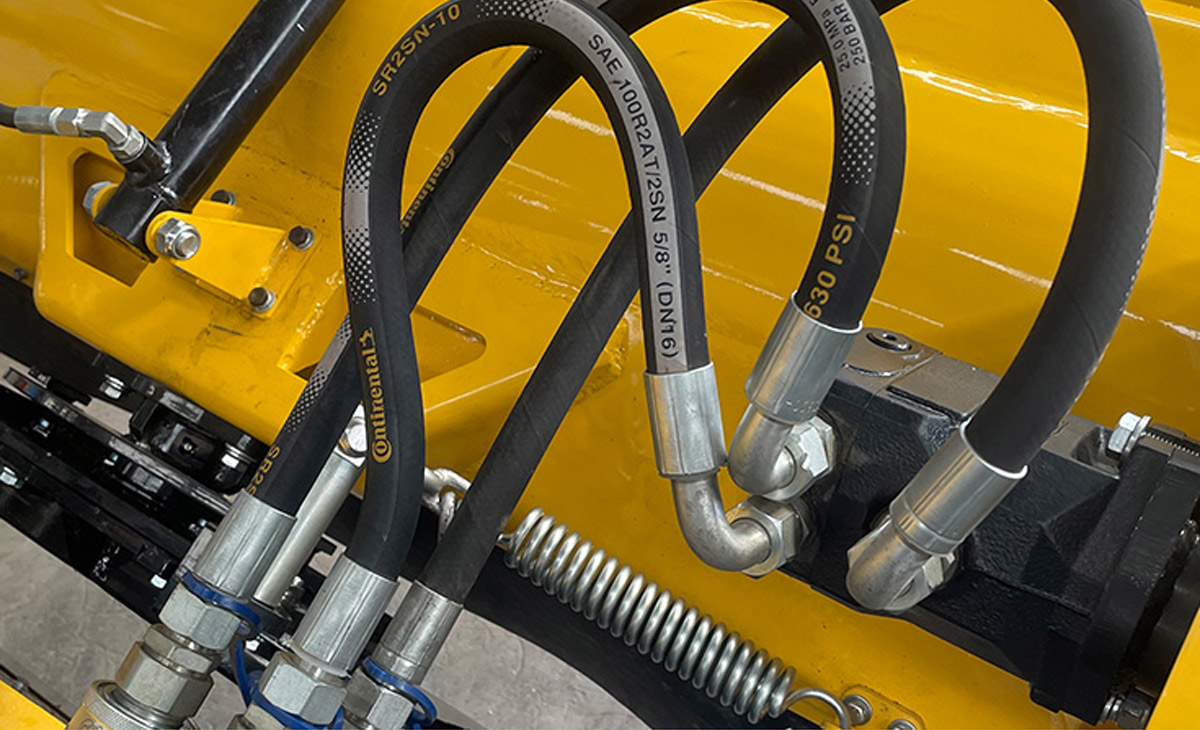
Spare parts – including blade sets, track segments, hydraulic hoses, and transmitter batteries – are stocked in regional warehouses (Europe, North America, Asia) with delivery typically within 3–5 business days. A 12‑month warranty covers hydraulic and electronic components; the diesel engine carries a 24‑month manufacturer’s warranty.